Recently, I visited the glorious state of Gujarat. I had seen Ahmedabad way back in 2018, and even then I knew this state had so much more to offer — I’d be back, for sure. And this time, I returned with intention.
On this trip, I covered Jamnagar, Dwarka, Somnath, and Gir, with quick stops at Porbandar and Rajkot along the way. Every city had its own distinct charm, and honestly, I would have loved to slow down and spend more time in each.
I Jamnagar: A brief but beautiful introduction
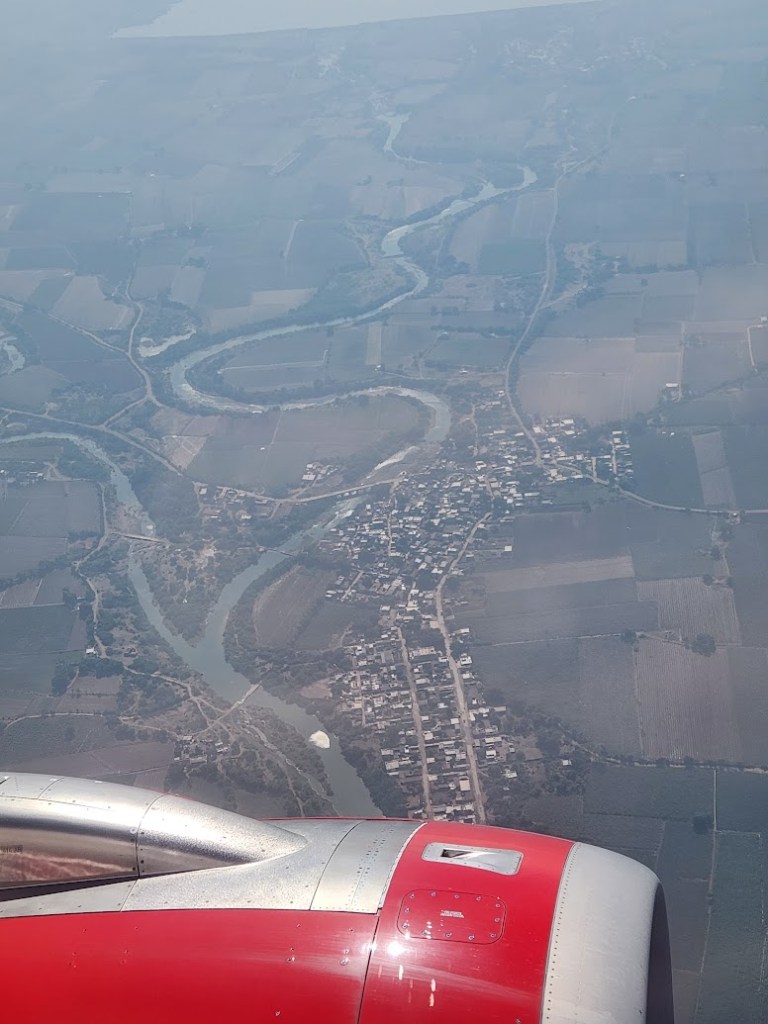
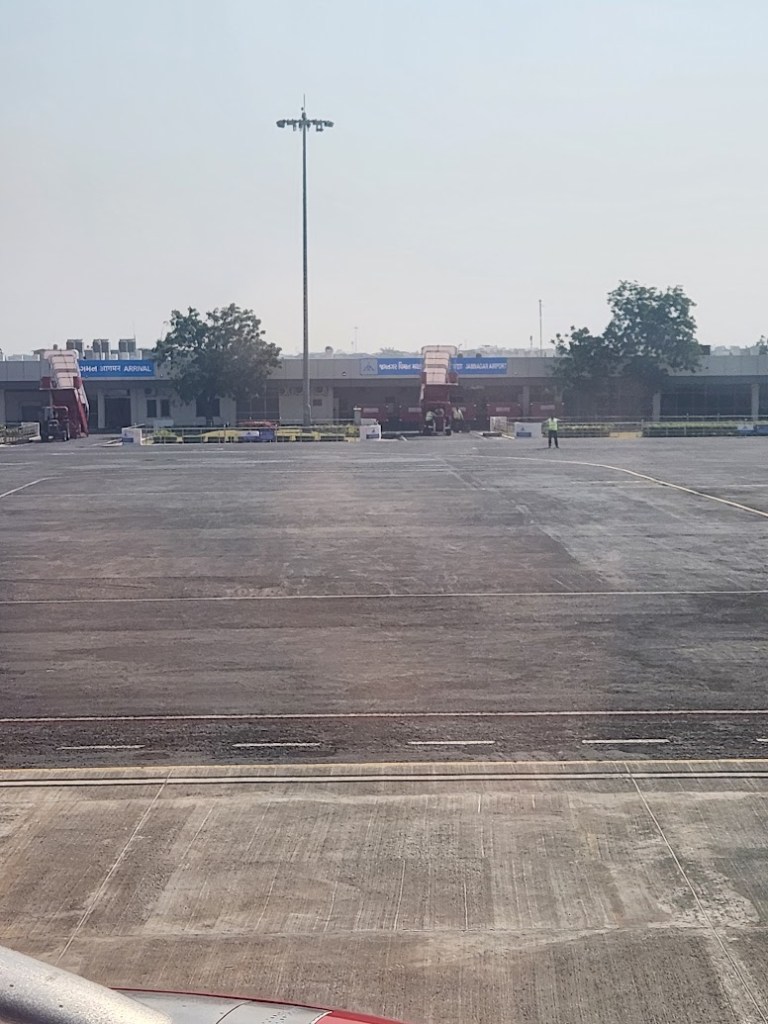
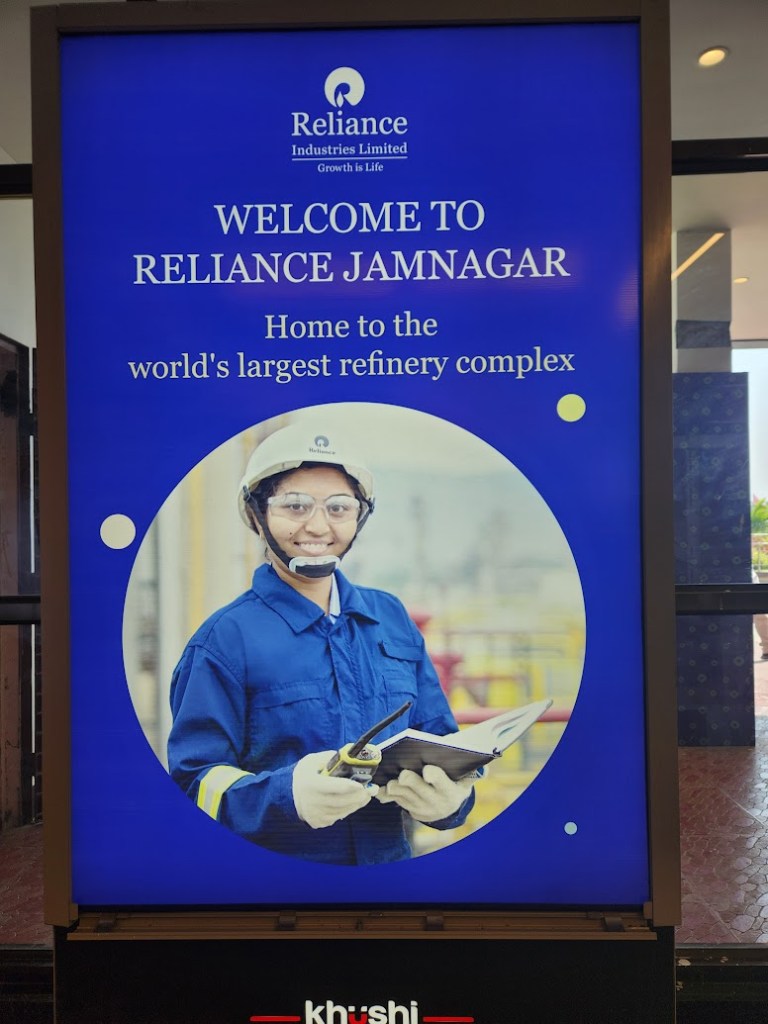
I flew into Jamnagar — a small, charming airport with signboards that proudly read “Welcome to Reliance Jamnagar.” With just about two hours at hand, I hopped into an auto and set out to explore.
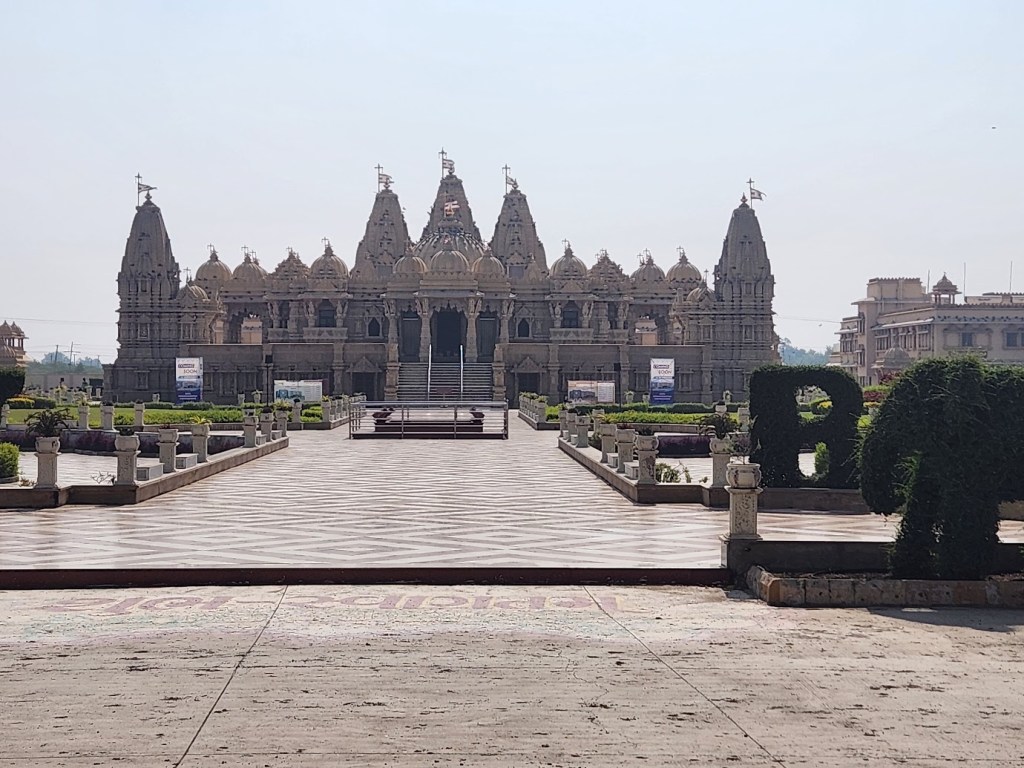
My first stop was the BAPS Shri Swaminarayan Mandir, barely five minutes from the airport. I landed in the afternoon, and since the temple remains closed from 12 noon to 4 pm, I couldn’t step inside. Still, like all BAPS temples, this one was magnificent — sprawling, serene, and architecturally stunning even from the outside.
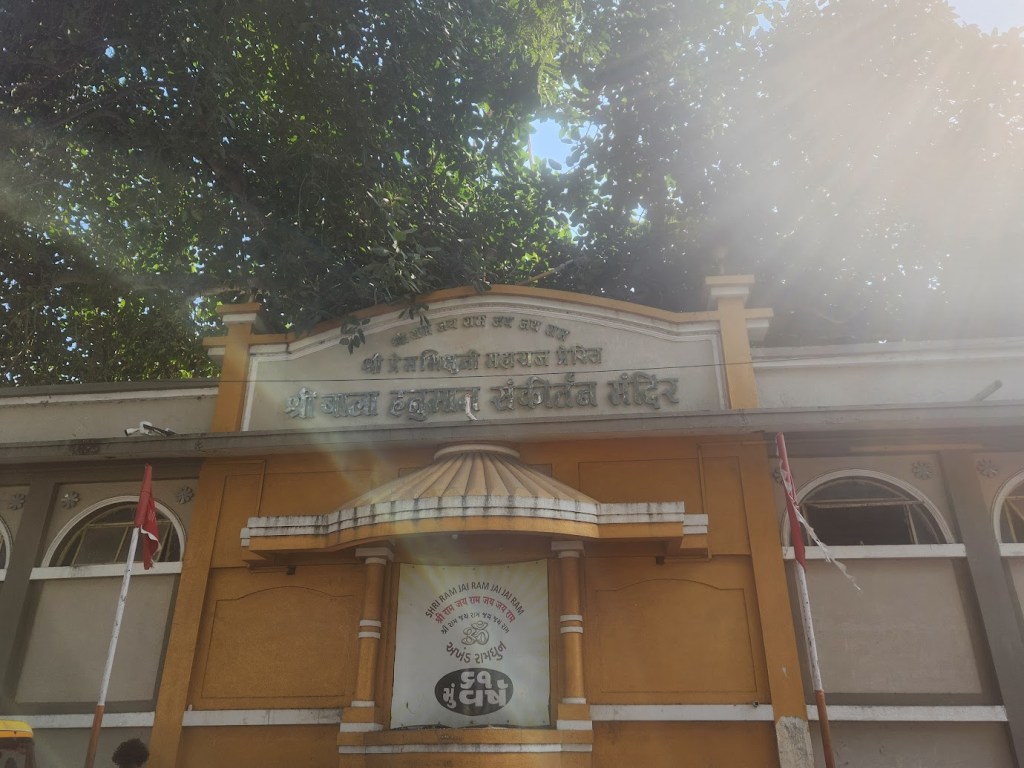
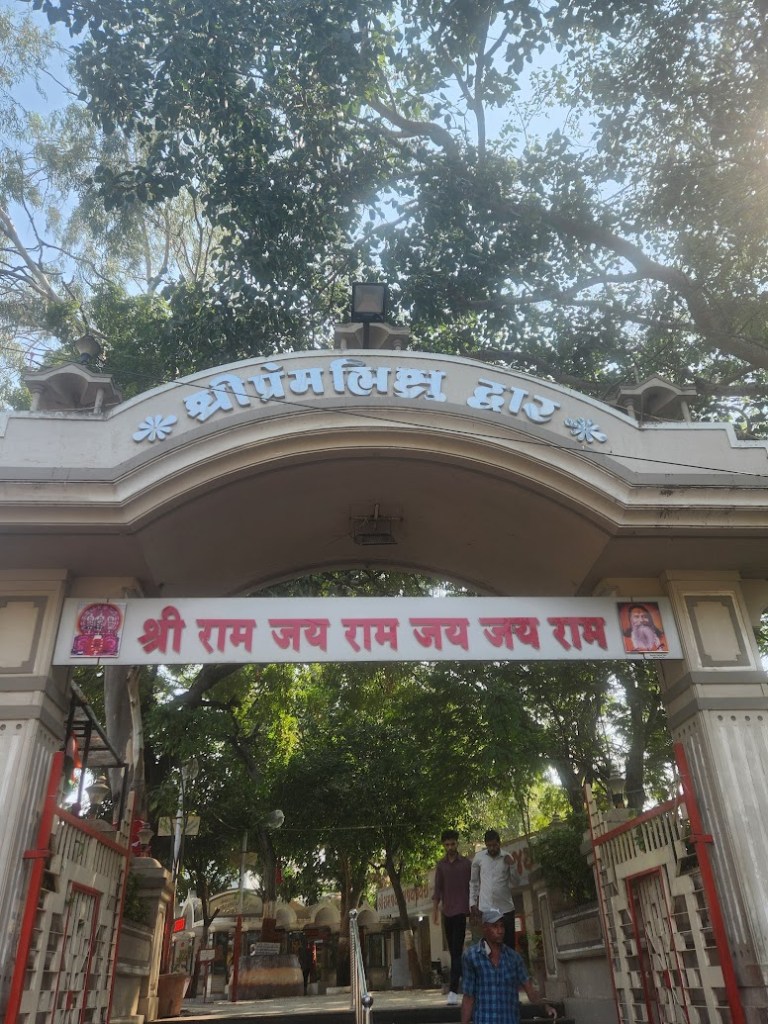
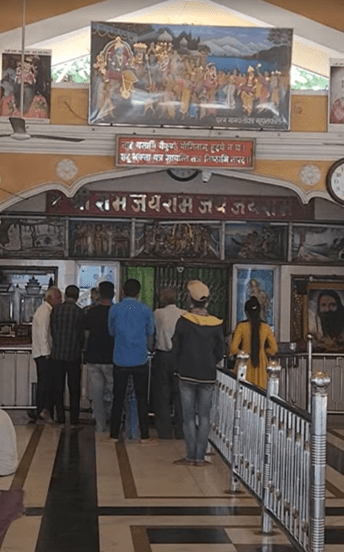
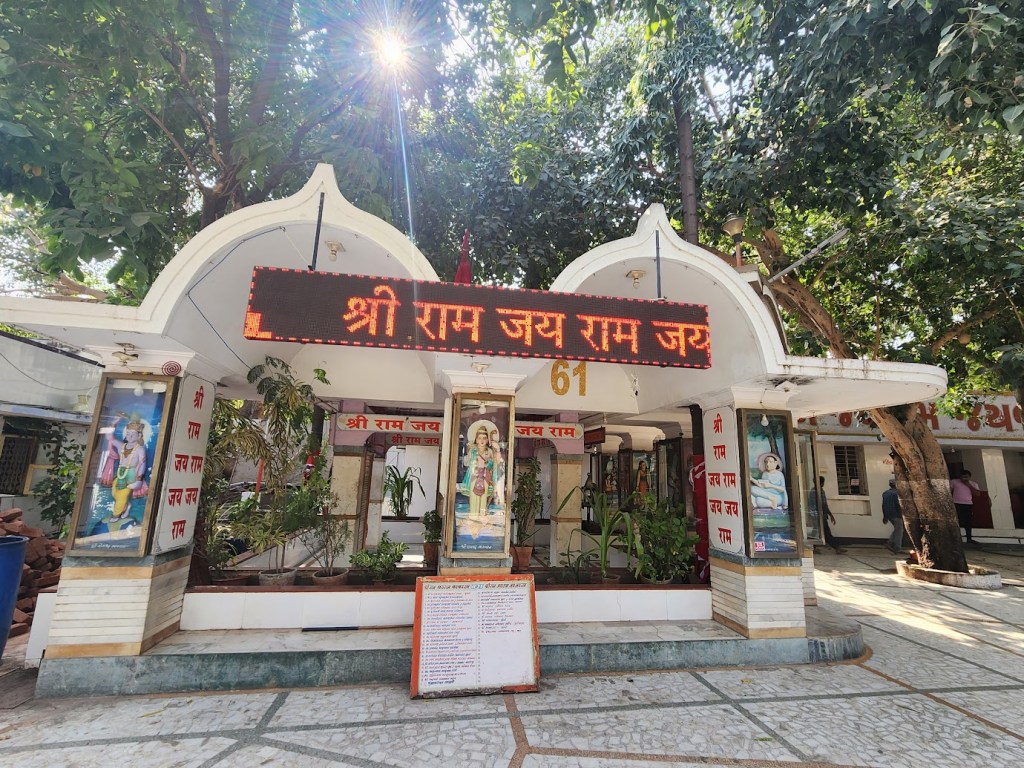
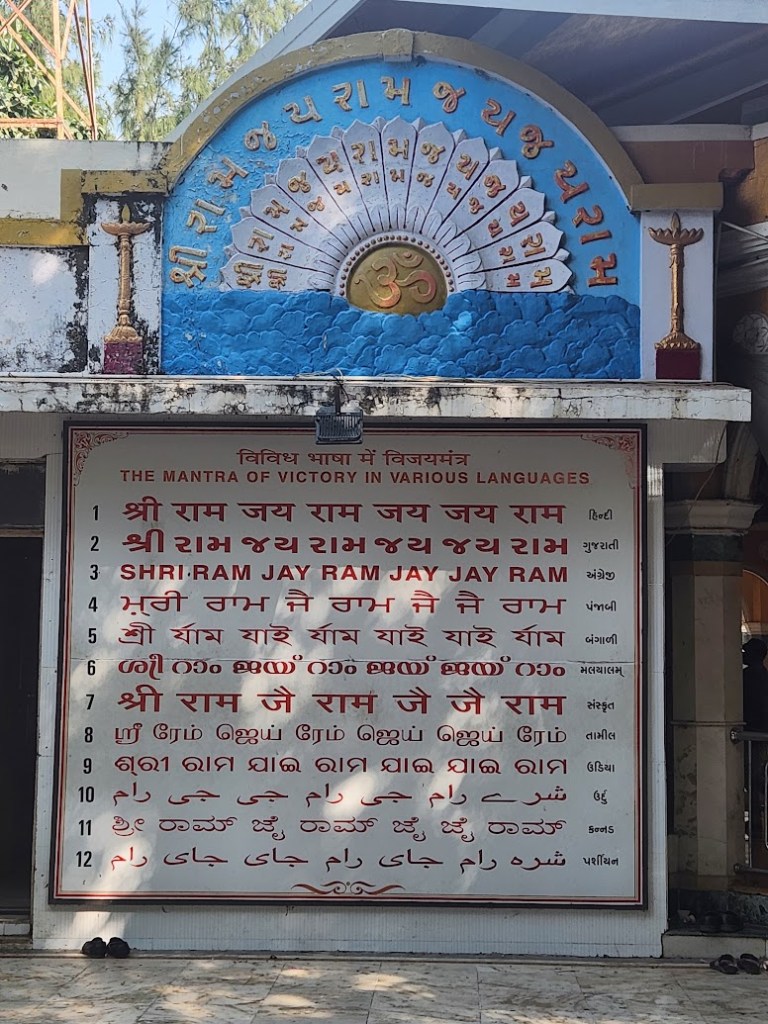
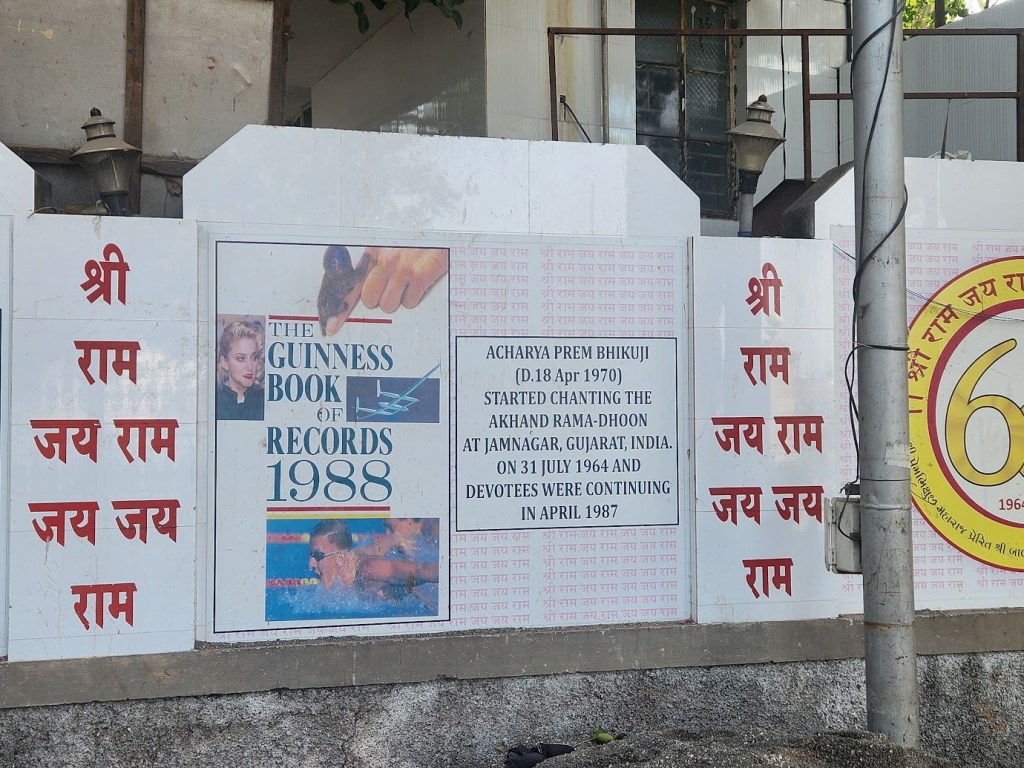
Next, I visited the Shri Bala Hanuman Sankirtan Mandir — easily one of the most talked-about places in Jamnagar, and for good reason. Here’s something most people don’t know: devotees have been chanting the Ramdhun — “Shri Ram, Jai Ram, Jai Jai Ram” — continuously since 31st July, 1964. In 1988, this 24-hour ritual was officially recognized by the Guinness Book of World Records. Sitting there, absorbing the devotion, the discipline, and the unwavering faith — the vibe was nothing short of surreal.
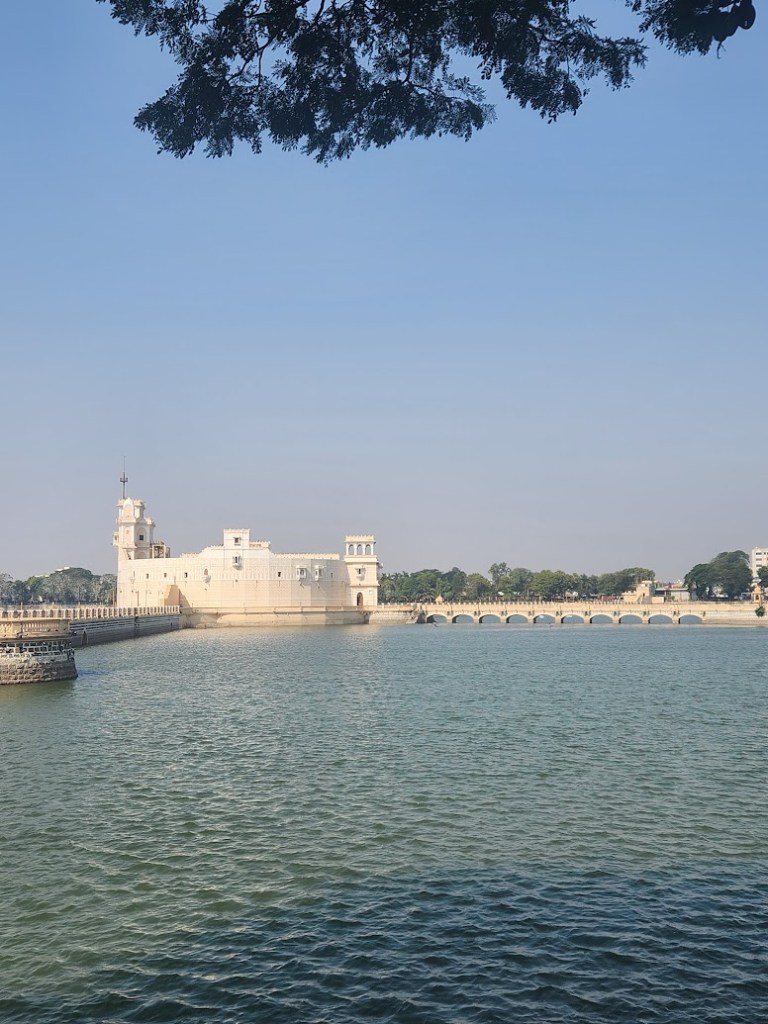
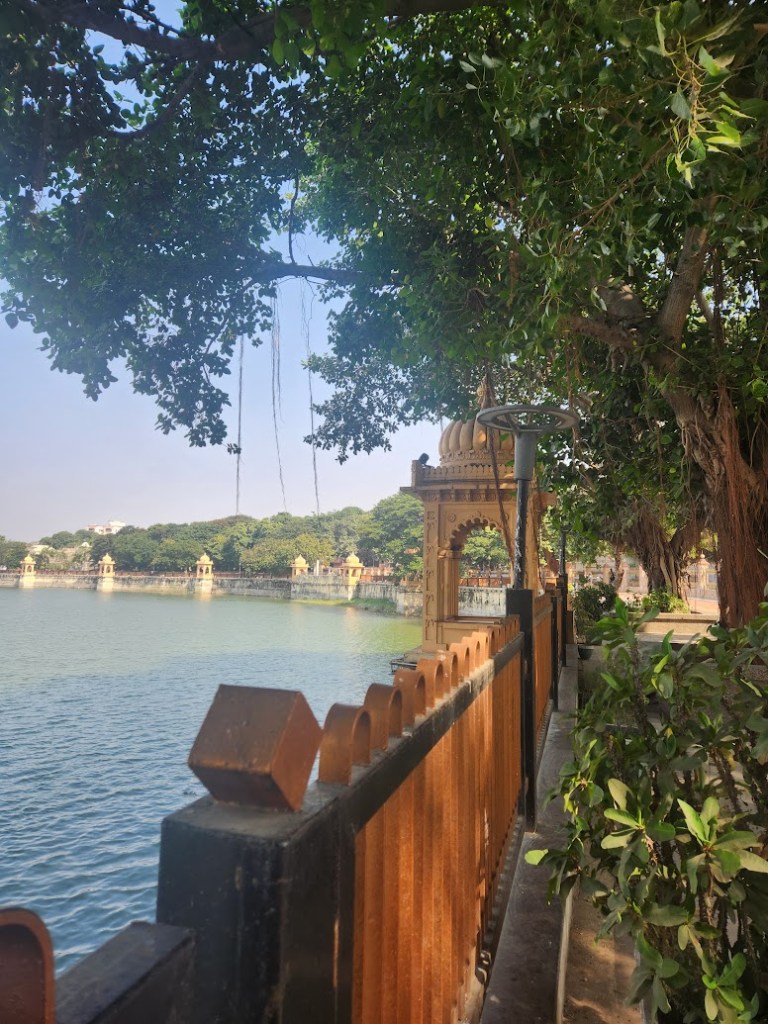
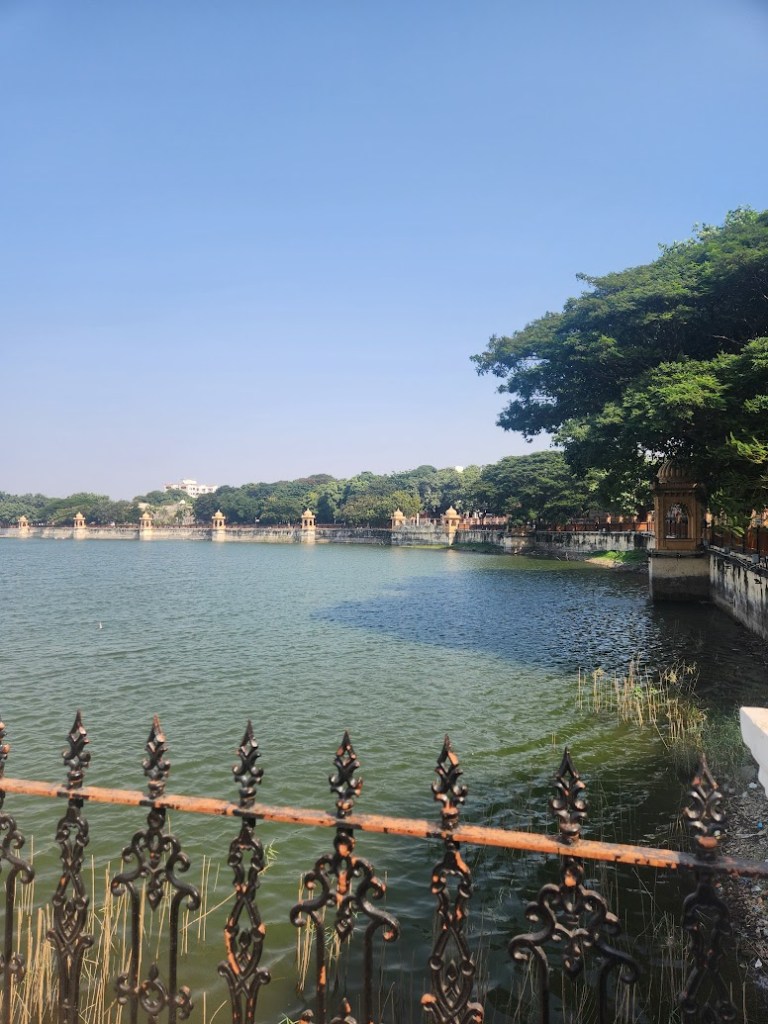
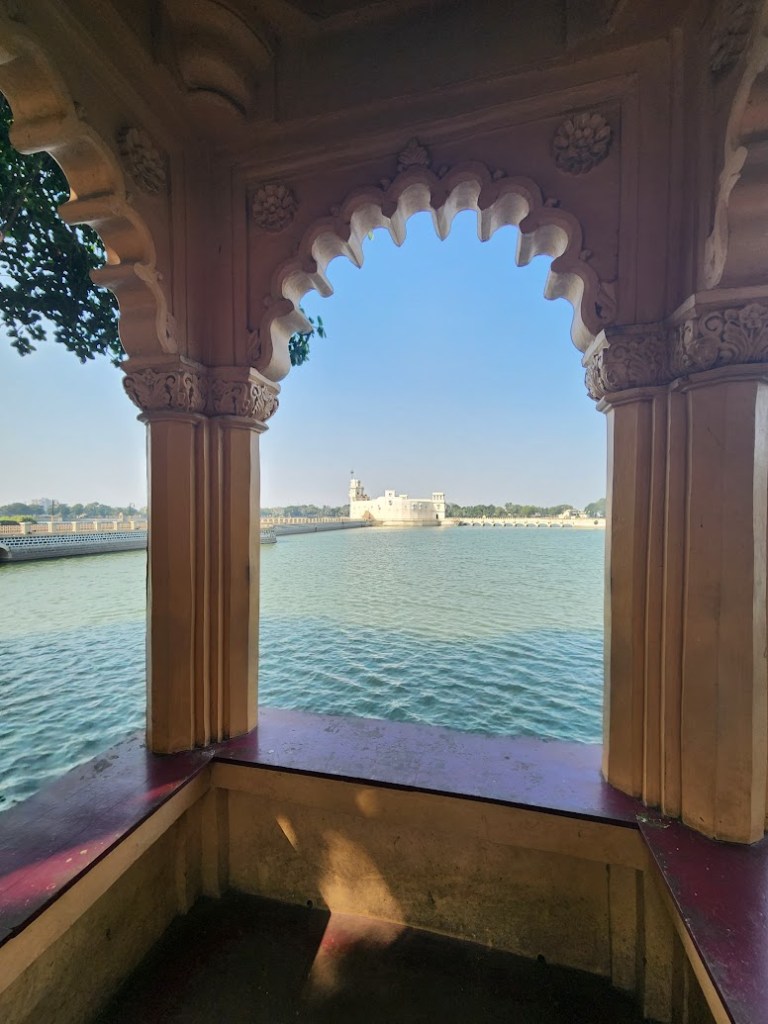
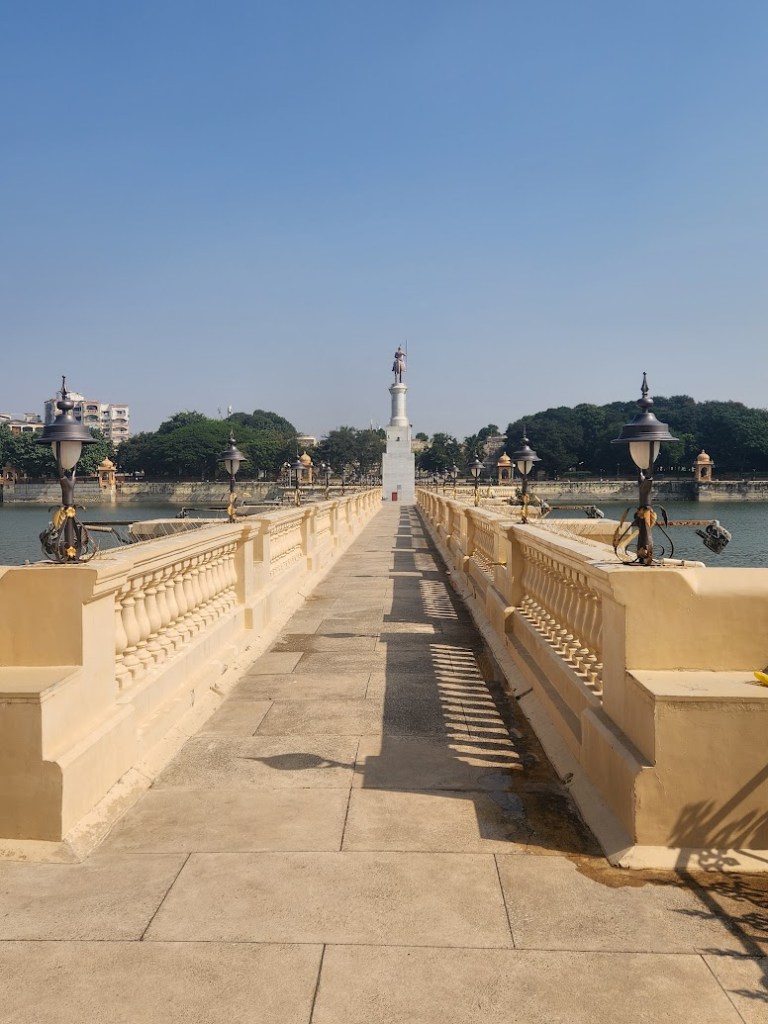
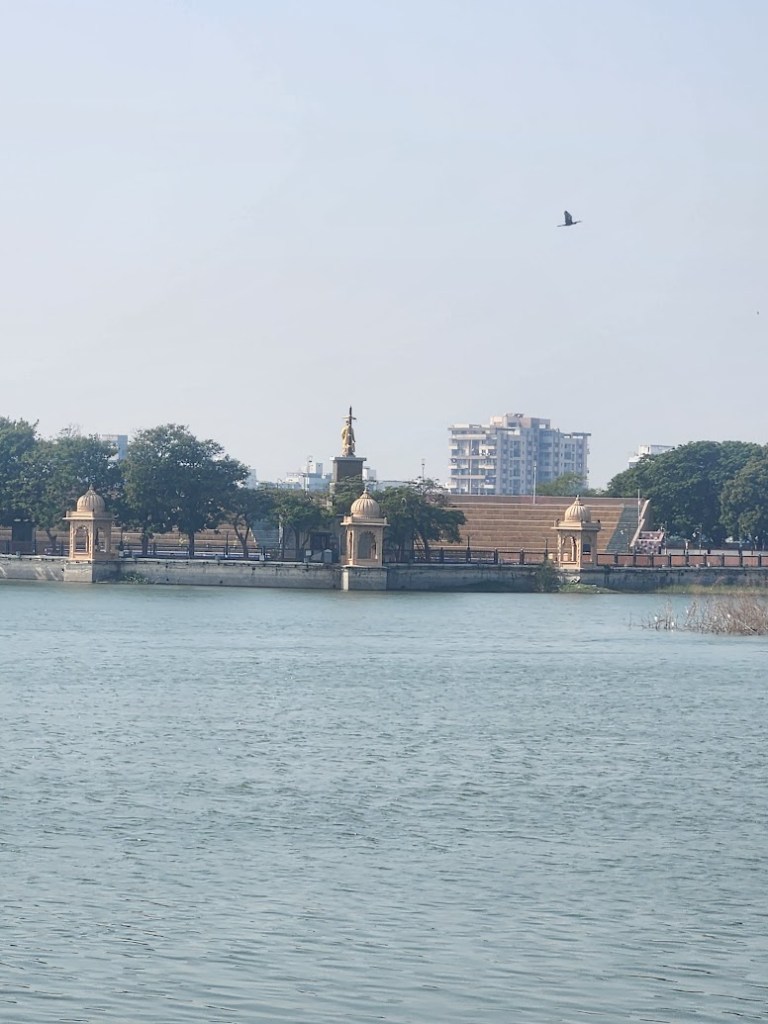
Right next to the Hanuman Mandir lies Lakhota Lake, one of the largest water bodies in the city. In the middle of the lake stands the Lakhota Palace, now a museum housing sculptures from the 9th to 18th centuries, along with arms, firearms, and medieval pottery. The lake is a favorite with both locals and tourists — clean, peaceful, with paved walking paths, benches to sit, soak in the breeze, and admire the palace reflections. I’ve heard there’s also a musical fountain show in the evenings — something I missed this time.
That was all I could manage in my short window. But if (and when!) I return to Jamnagar, Pratap Vilas Palace, Khijadiya Bird Sanctuary, and perhaps even Vantara are firmly on my list.
II On The Road to Dwarka
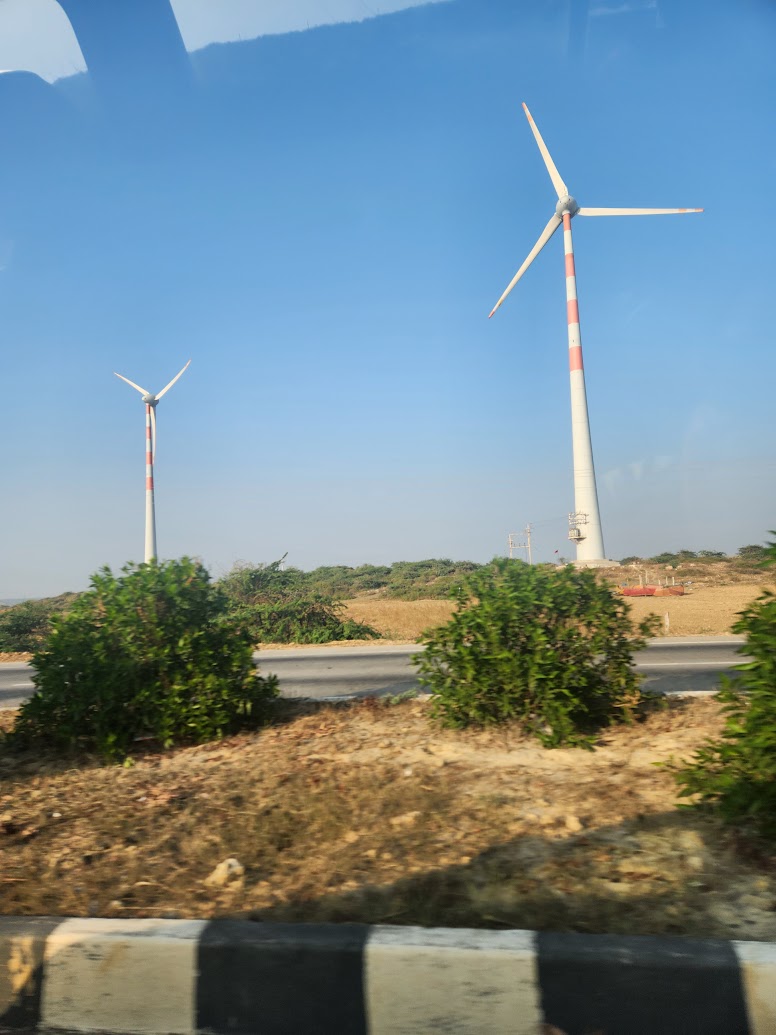
It was time to drive to Dwarka — a smooth, easy two-hour journey. Gujarat truly boasts some of the best roads in the country, making road travel a joy. Add to that the endless rows of windmills lining the highway — honestly, they reminded me of Amsterdam and made the drive incredibly scenic.
I spent one night in Dwarka and stayed at Dwarkadhish Lords Eco Inn, which turned out to be a great choice:
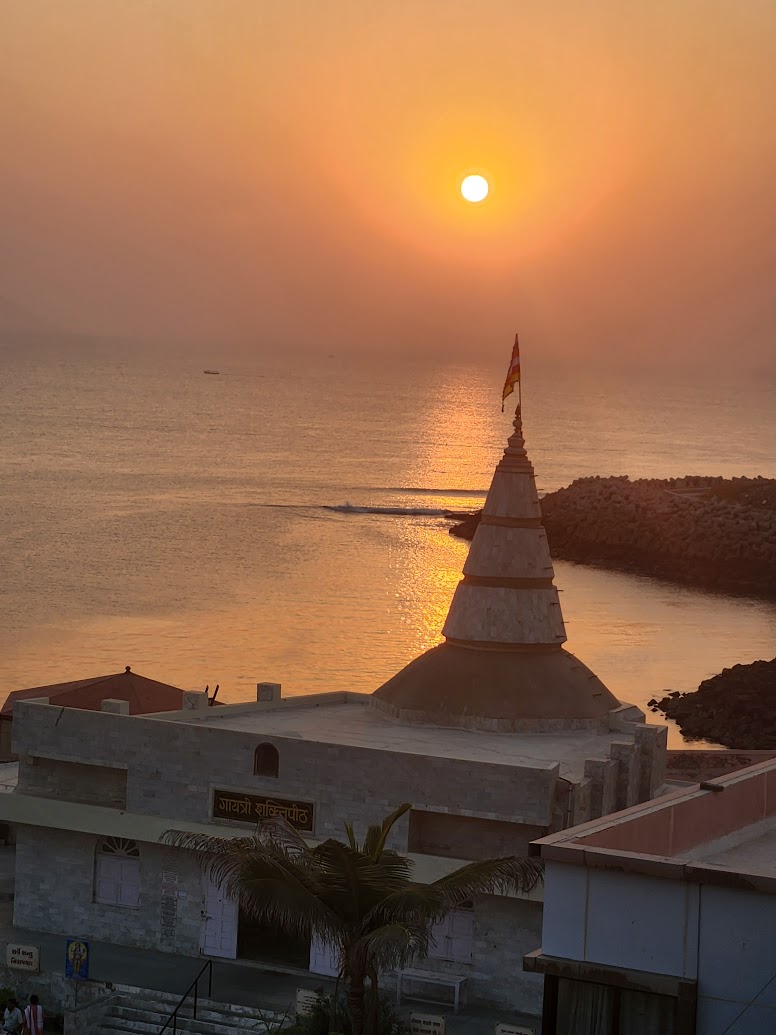
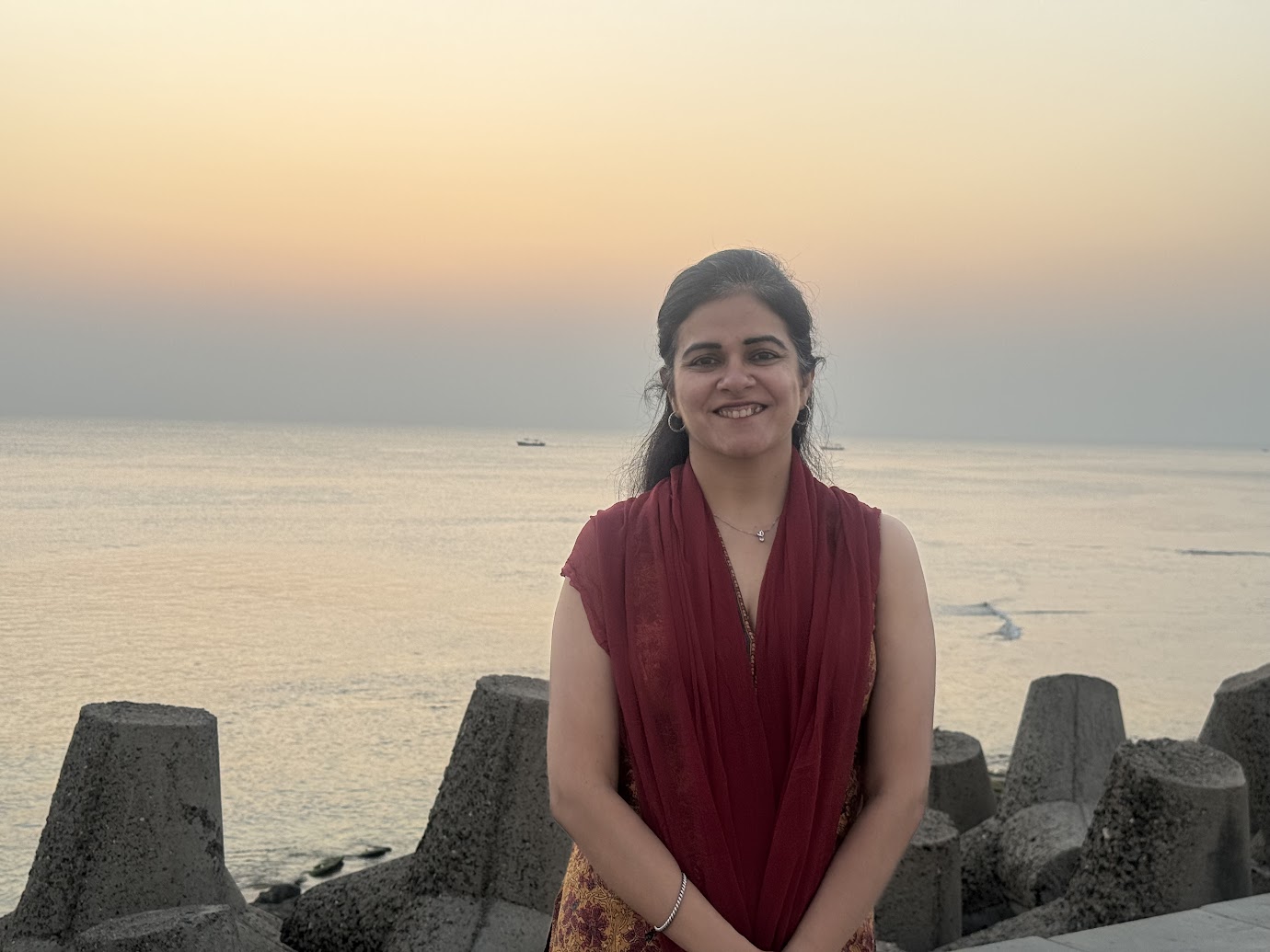
- I had a sea-facing room with stunning sunset views
- The service and food were quite decent
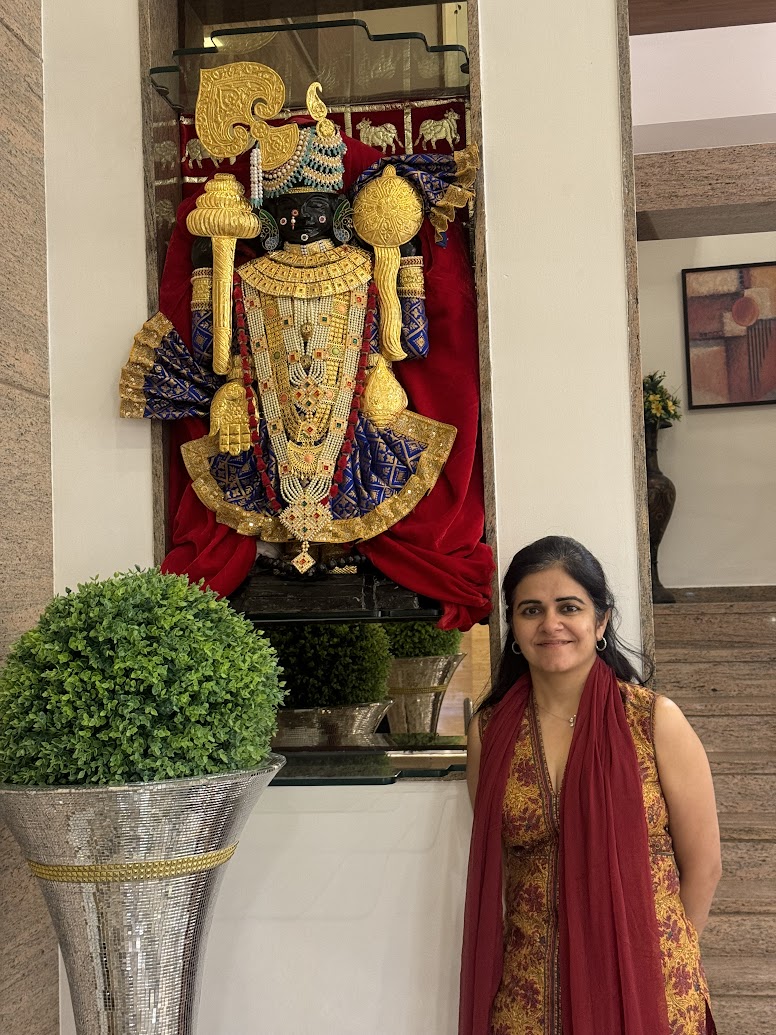
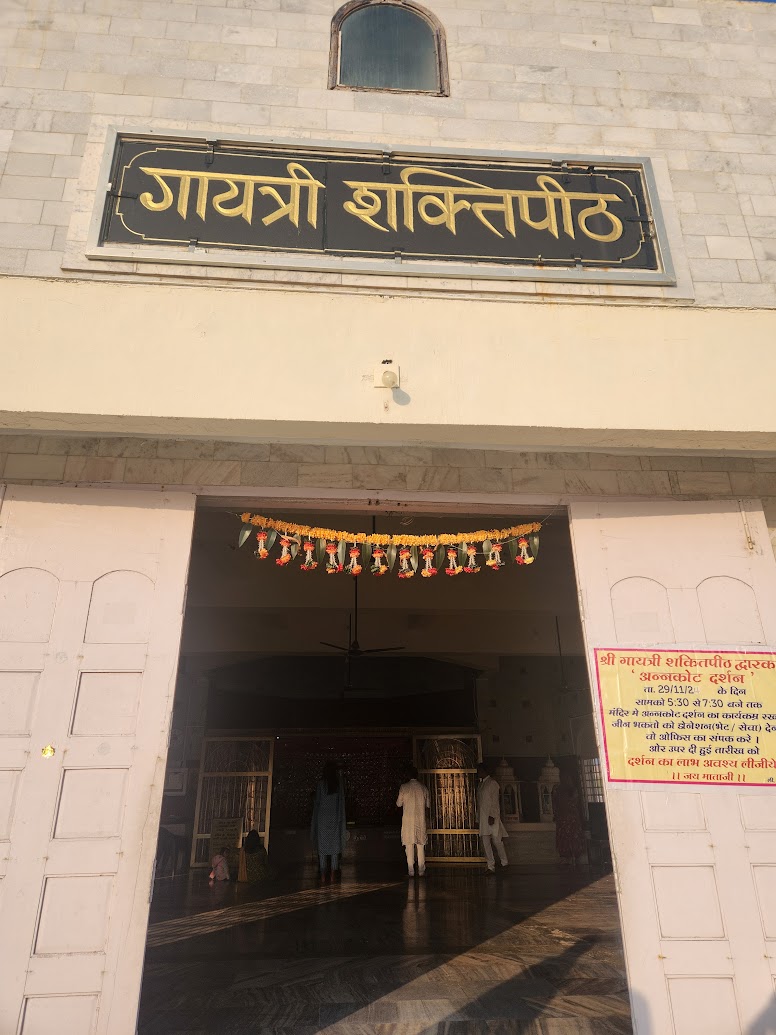
- The location was perfect — Gayatri Mandir (a Shaktipeeth) right next door, Gomti Ghat and Dwarkadhish Temple at walking distance, and plenty of eateries nearby
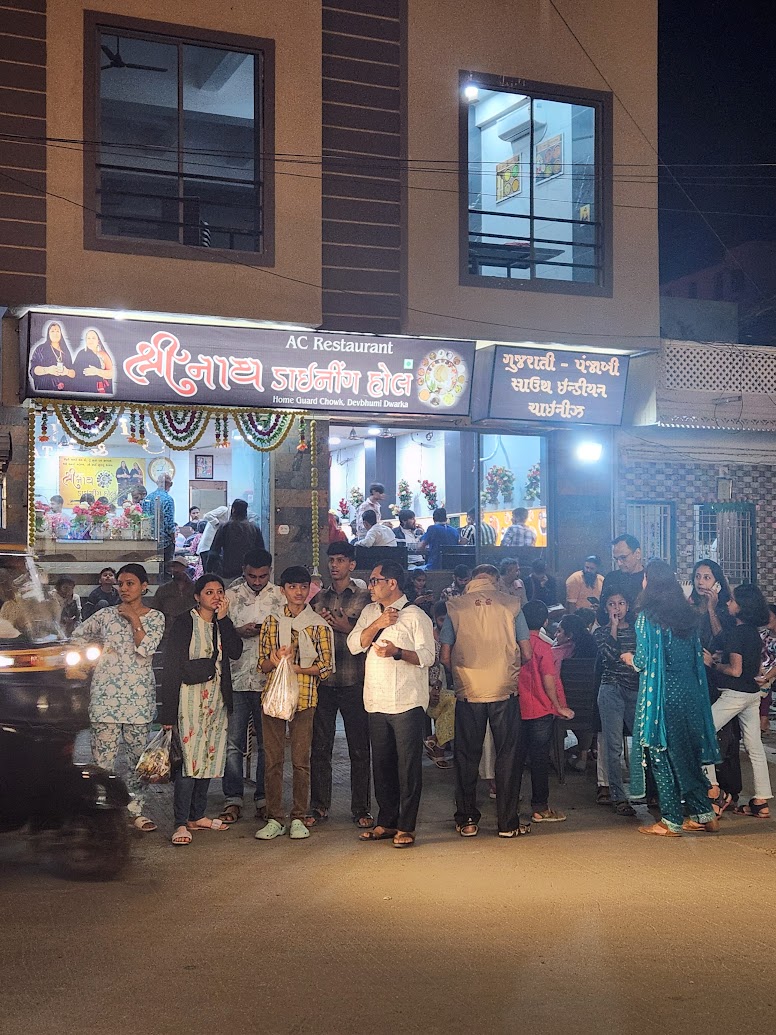
One evening, I enjoyed a delicious Gujarati thali at Shrinath Dining Hall, seated at a community table alongside a lovely family visiting from Junagadh — one of those small, warm travel moments that stay with you.
III Dwarkadhish: Faith, Rhythm, and Devotion
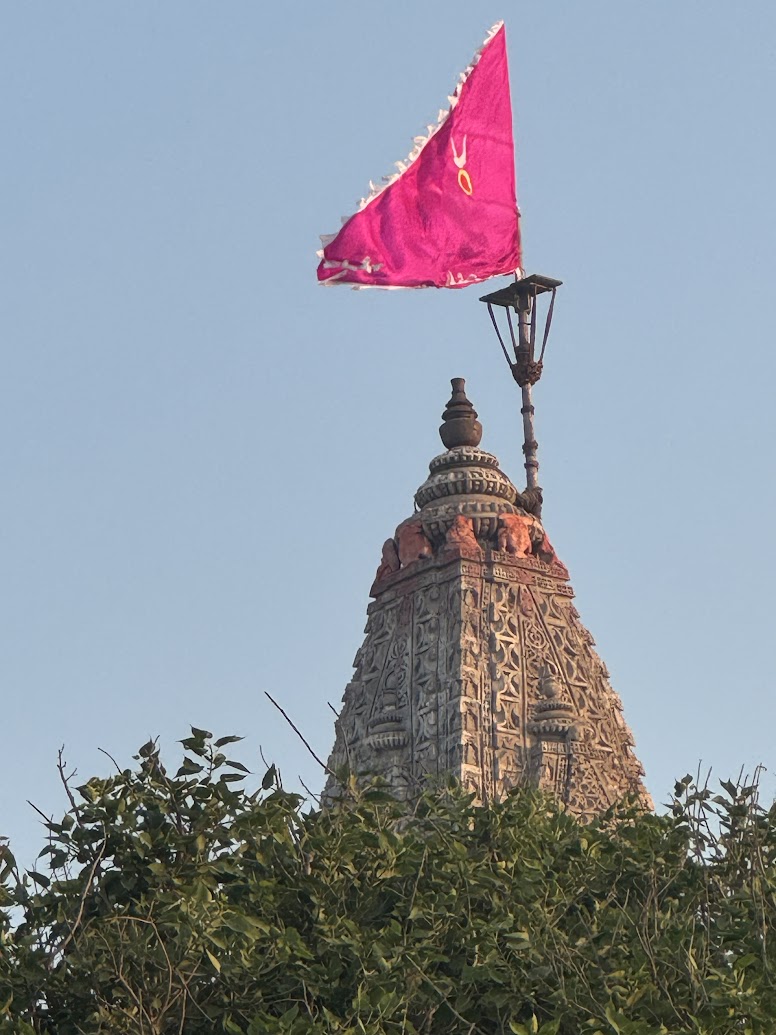
I feel deeply blessed to have visited the Dwarkadhish Temple, one of the Char Dham destinations, nestled along the banks of the Gomti River. I went in the evening and was completely mesmerized by the Sandhya Aarti — the chants, the dhols, the dancing — everything came together to create a vibrant, almost otherworldly atmosphere.
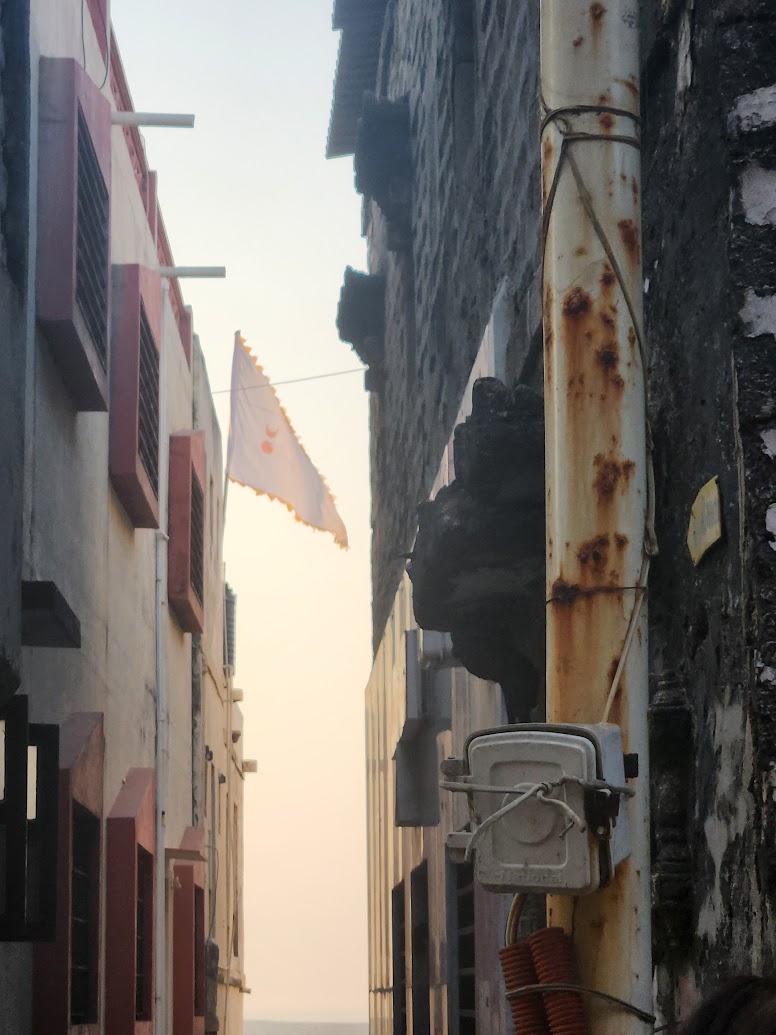
The temple’s shikhar bears a flag adorned with symbols of the sun and moon, signifying the eternal presence of Lord Krishna. This flag is changed five times a day, a sacred ritual often sponsored by devotees and carried out with immense devotion and precision. I was fortunate to witness this ceremony — moments like these, the crowds, the collective faith, they transport me to another realm altogether.
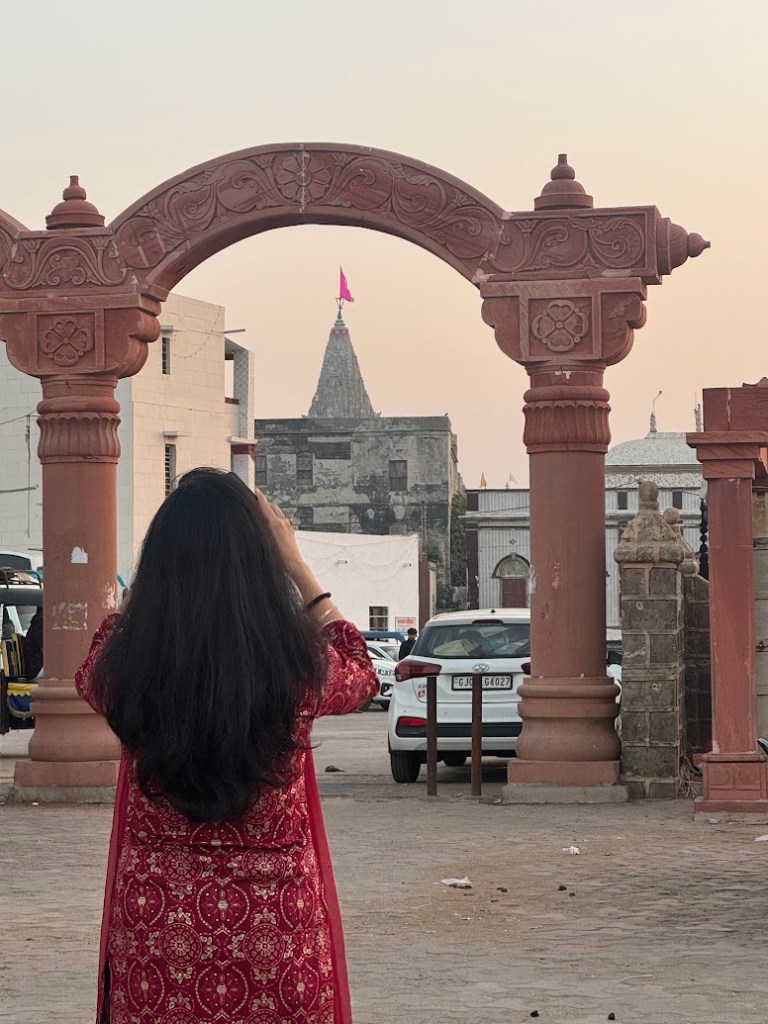
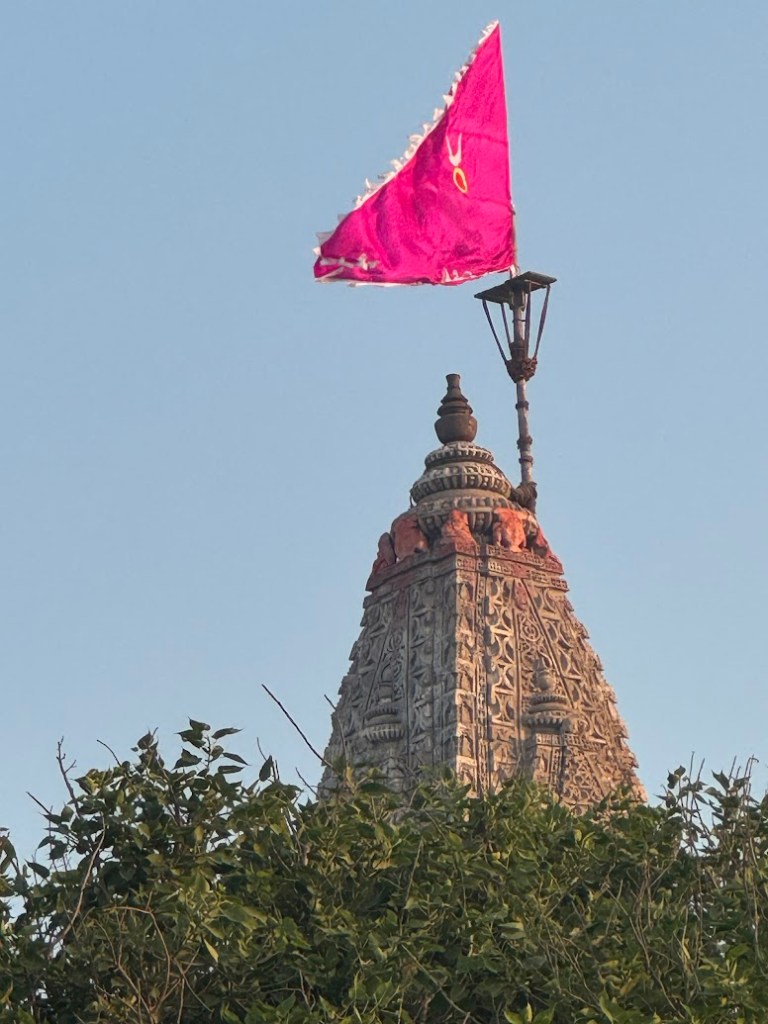
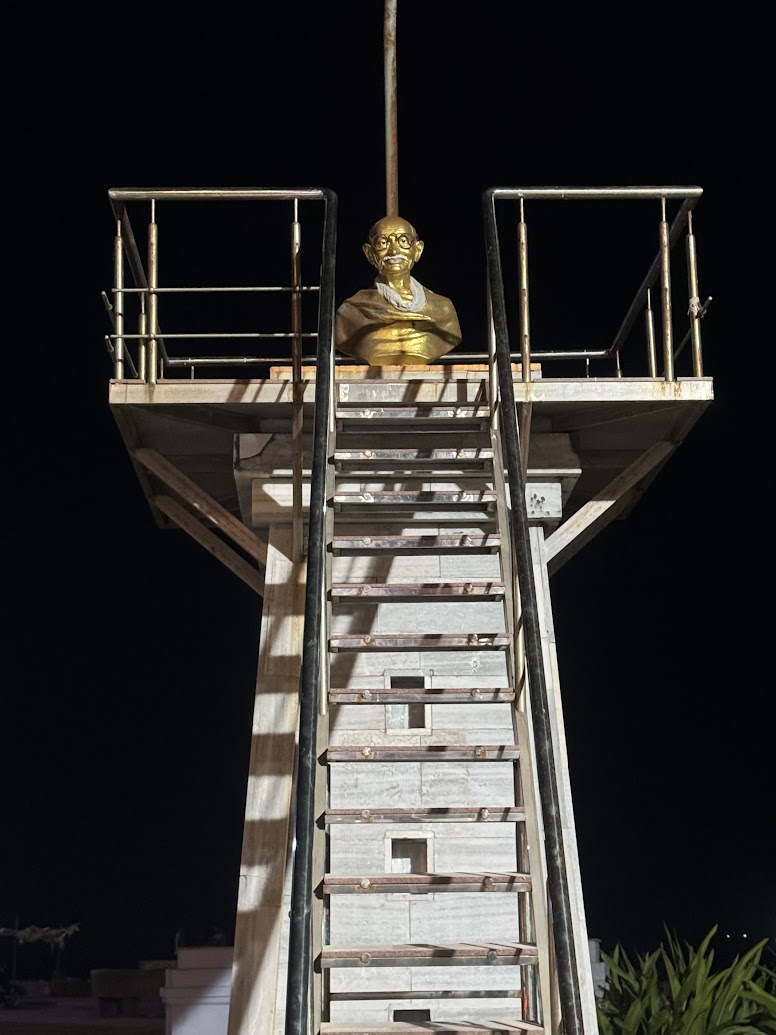
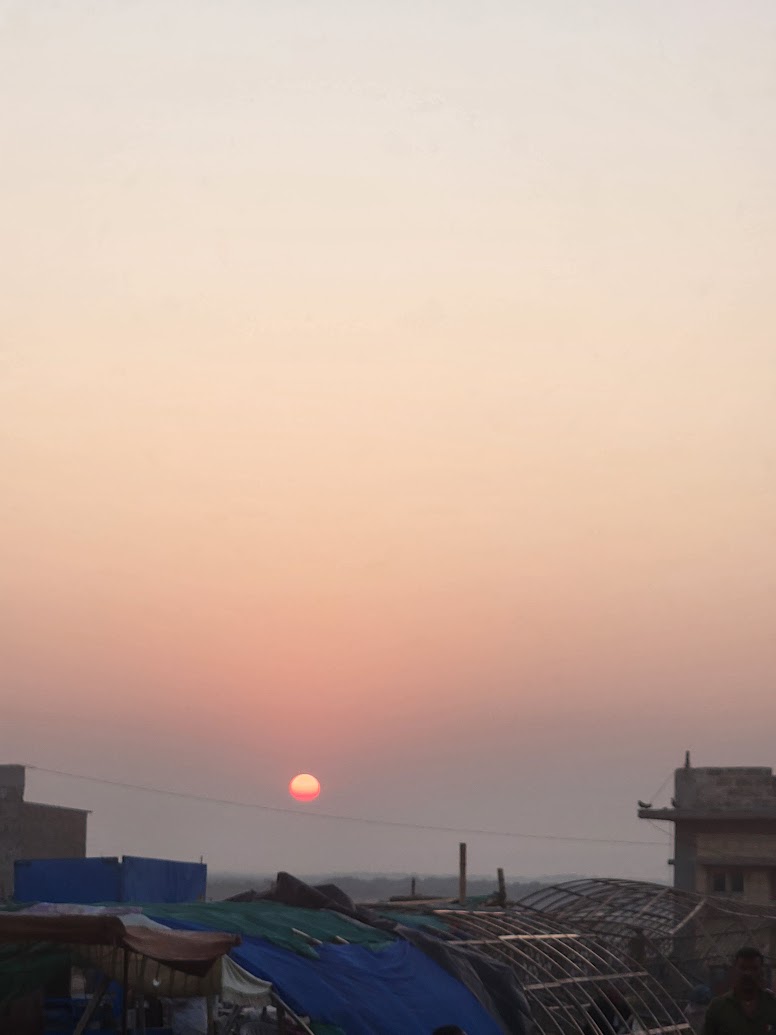
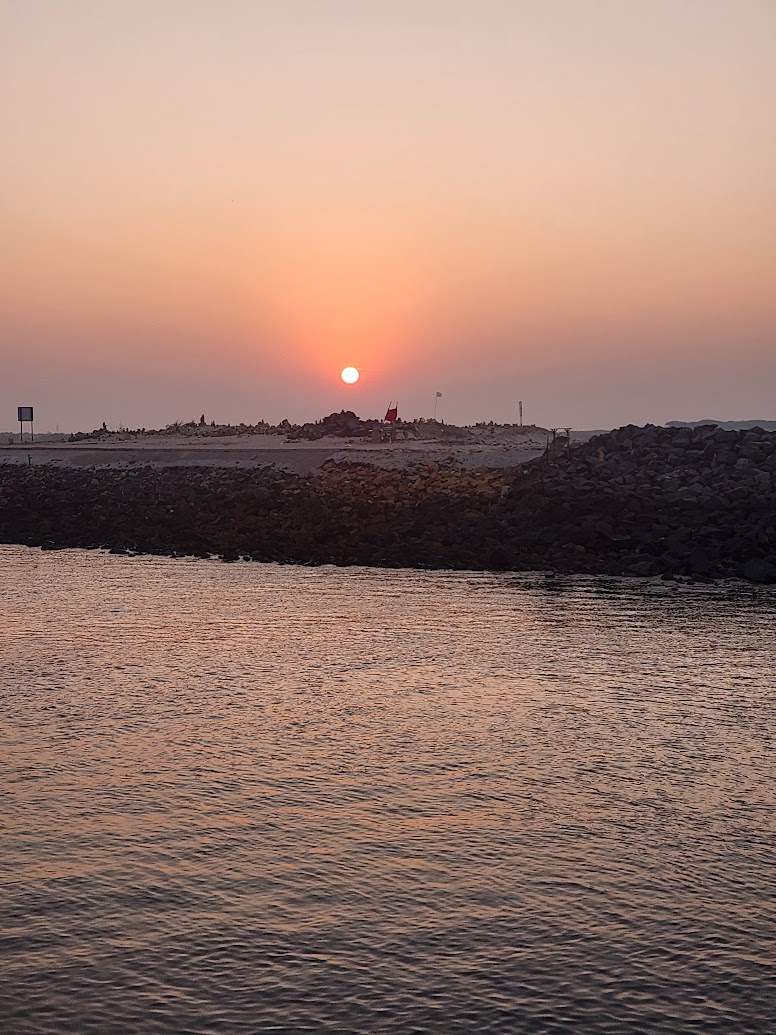
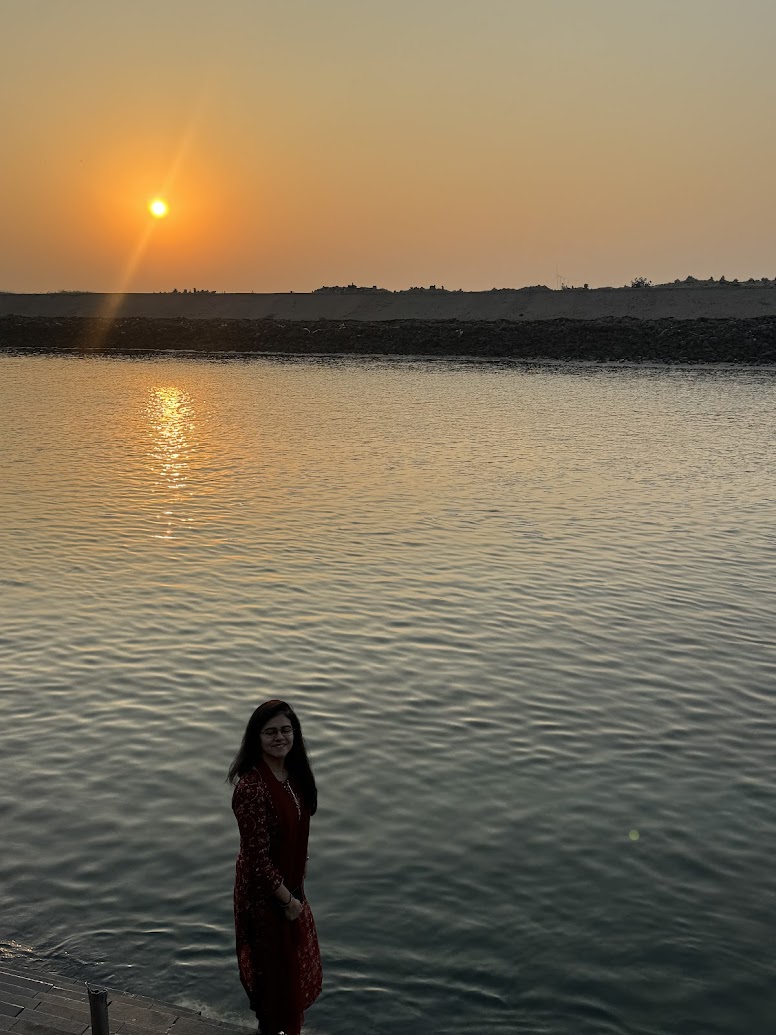
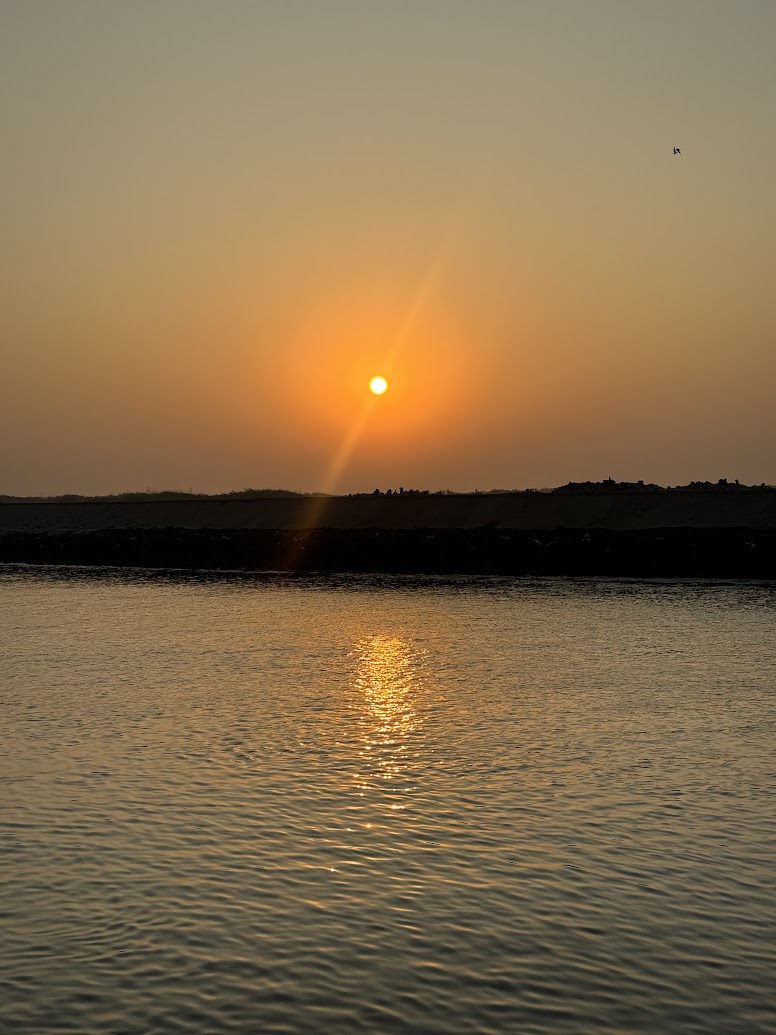
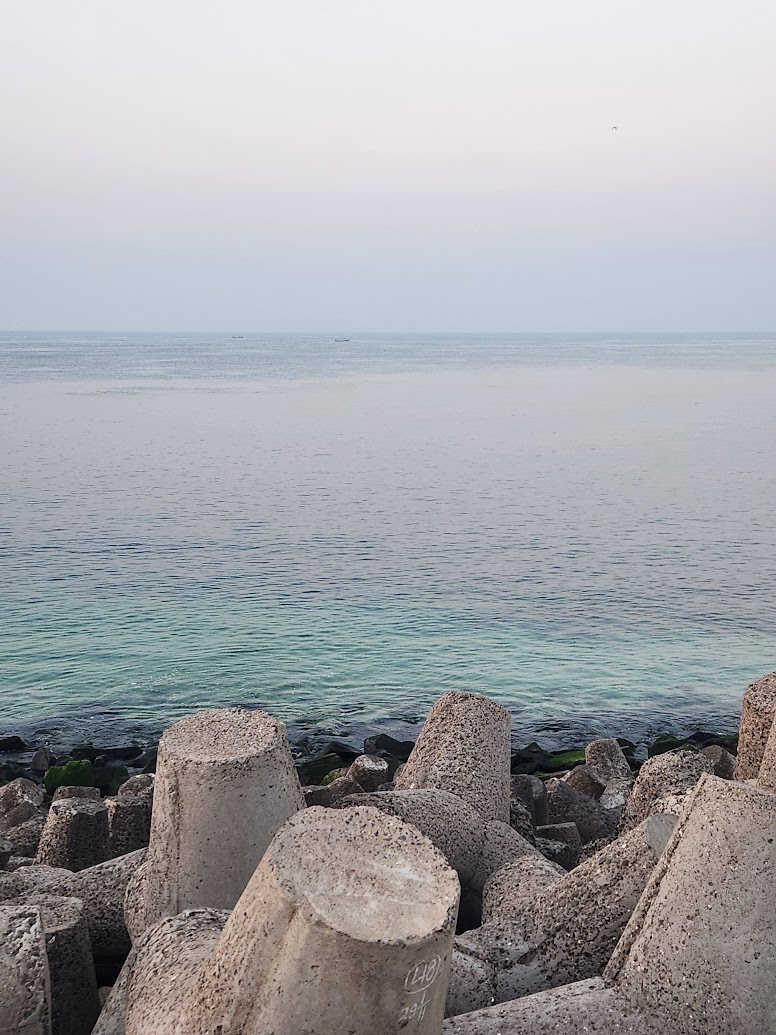
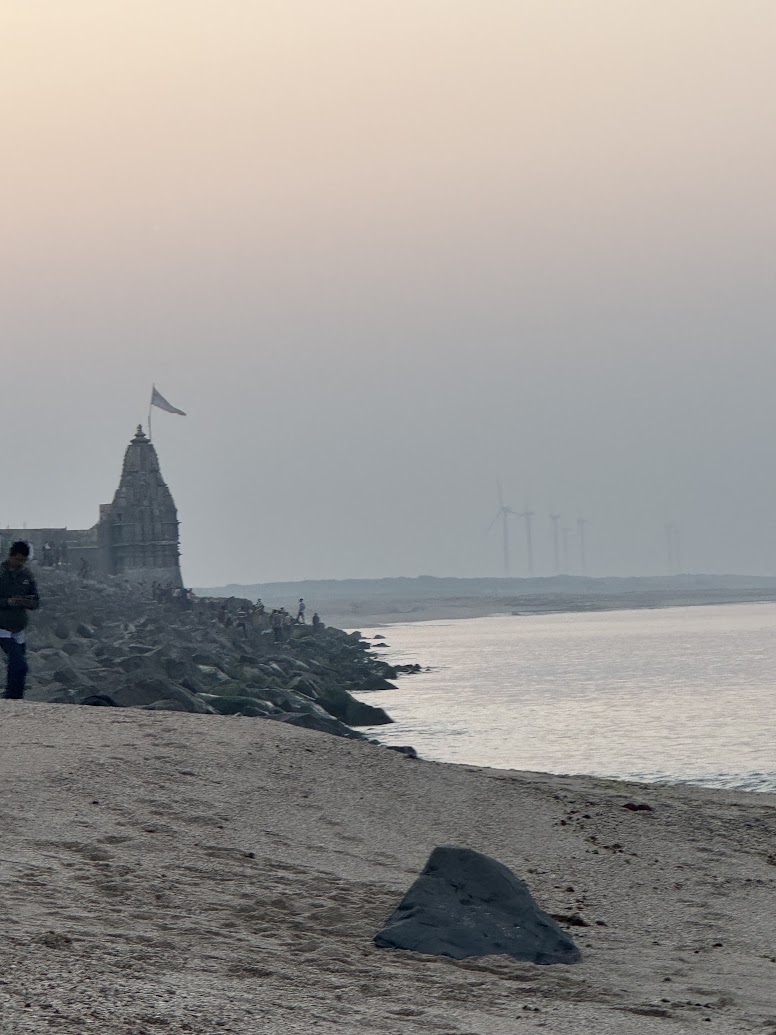
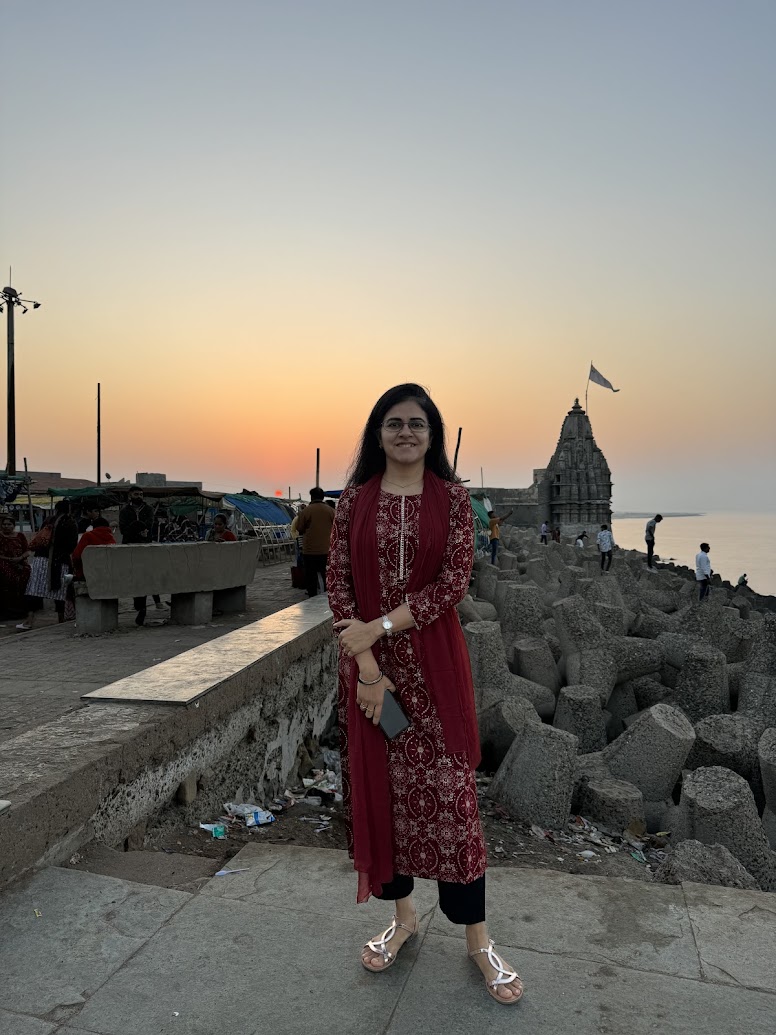
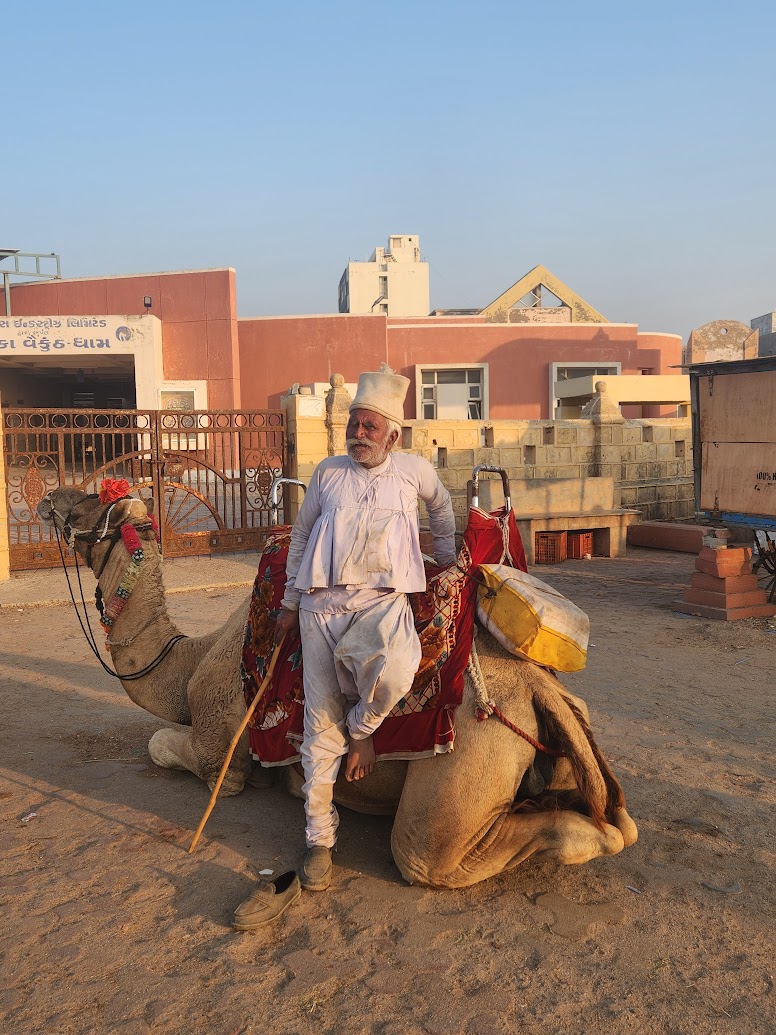
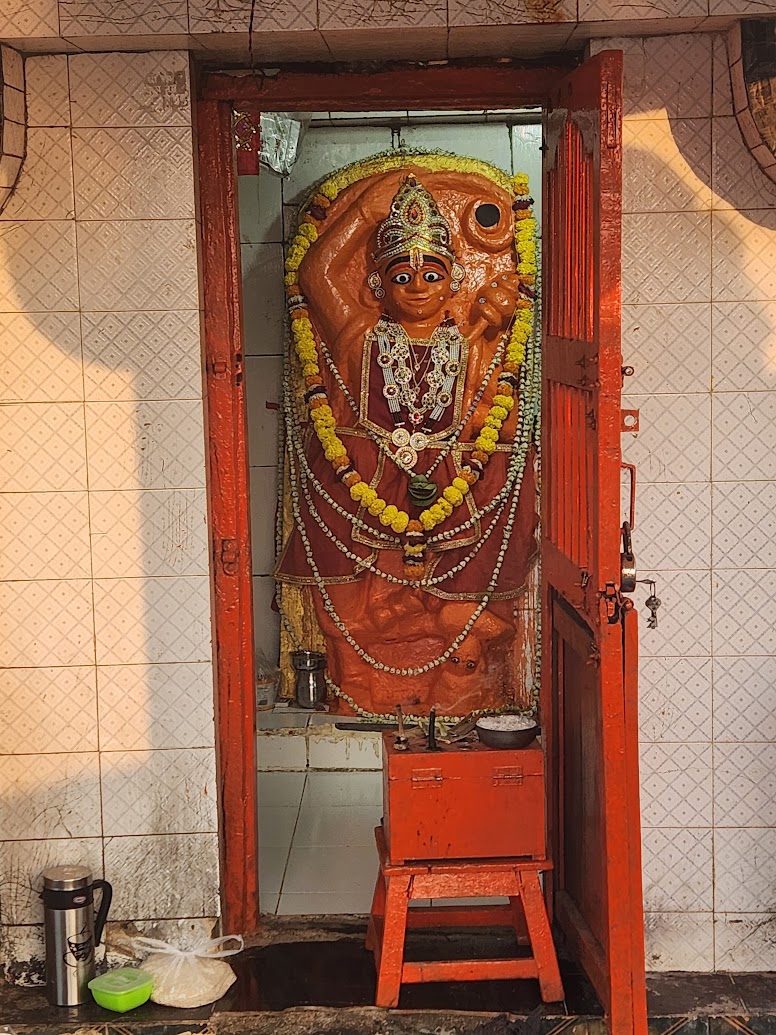
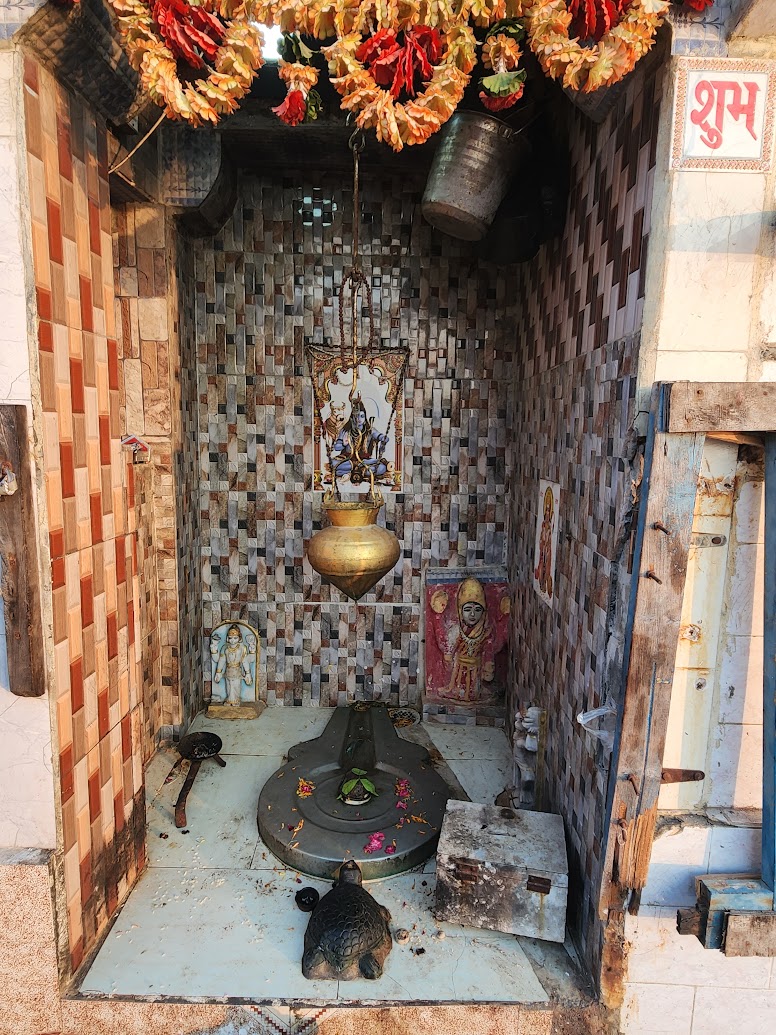
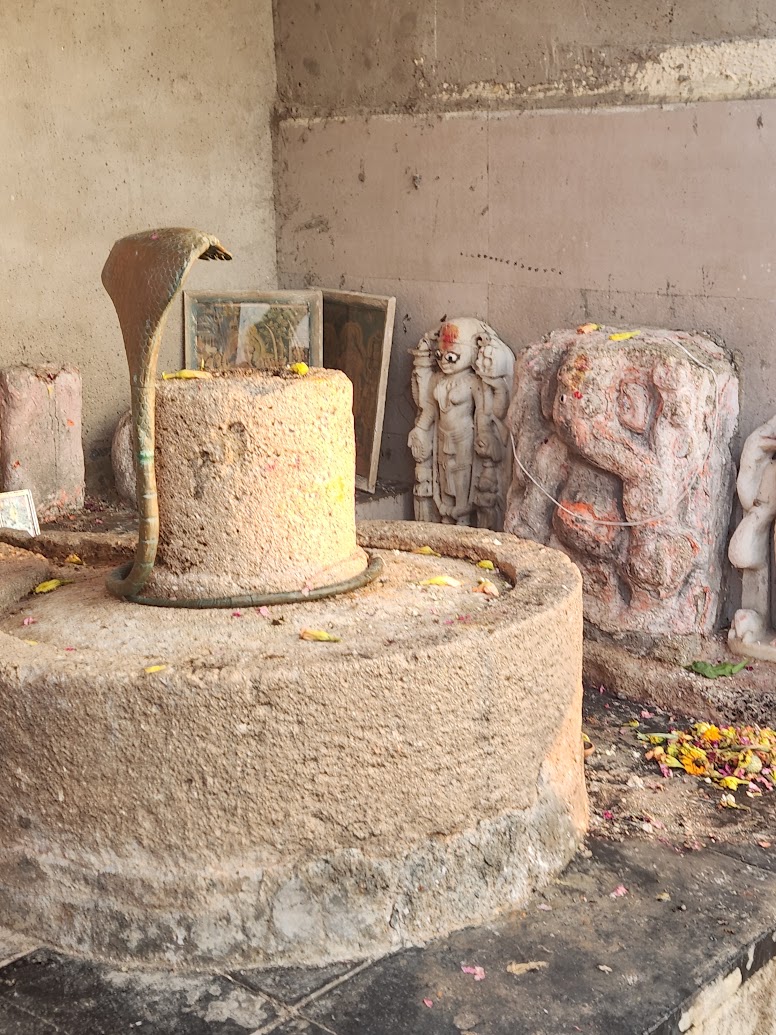
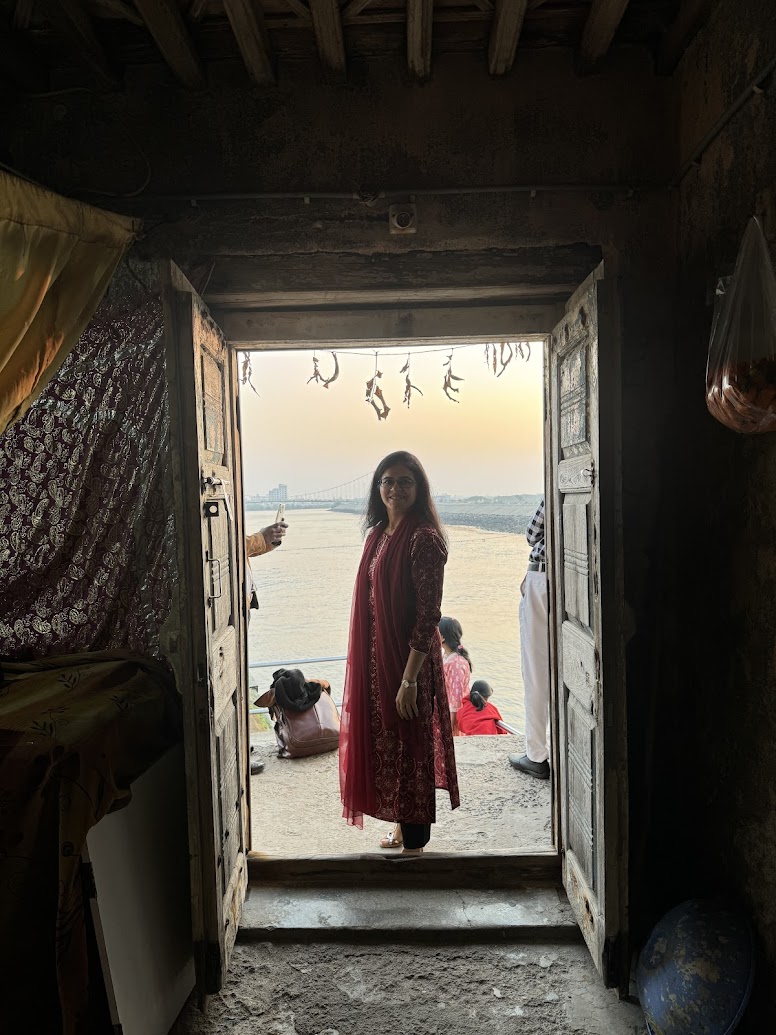
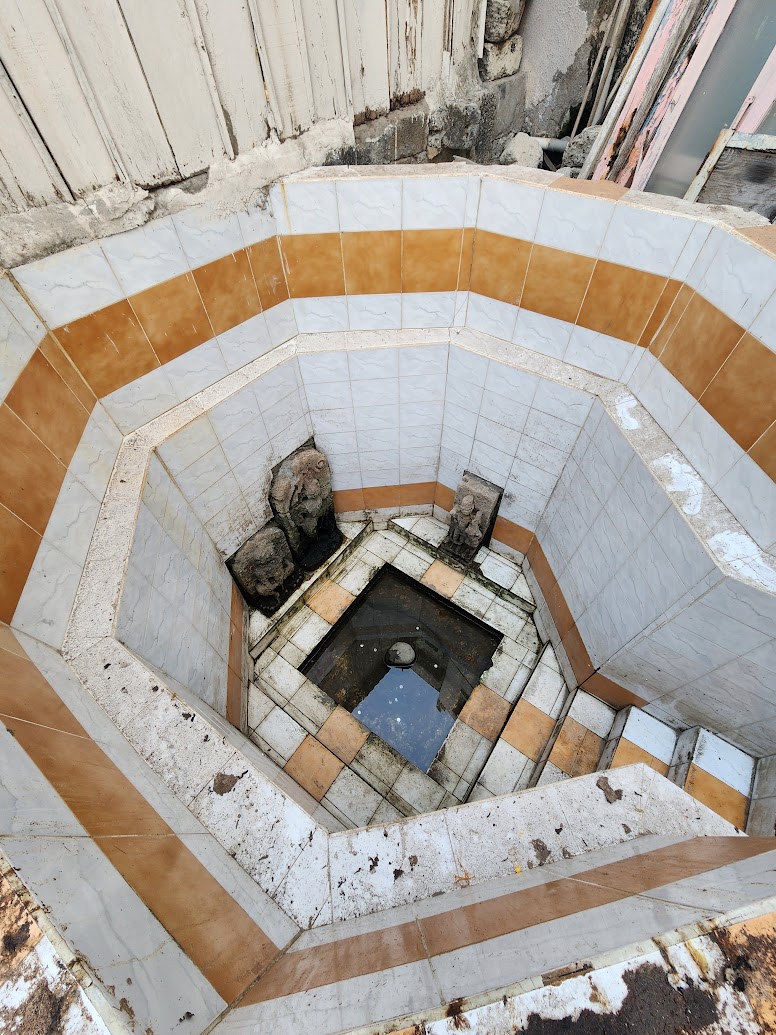
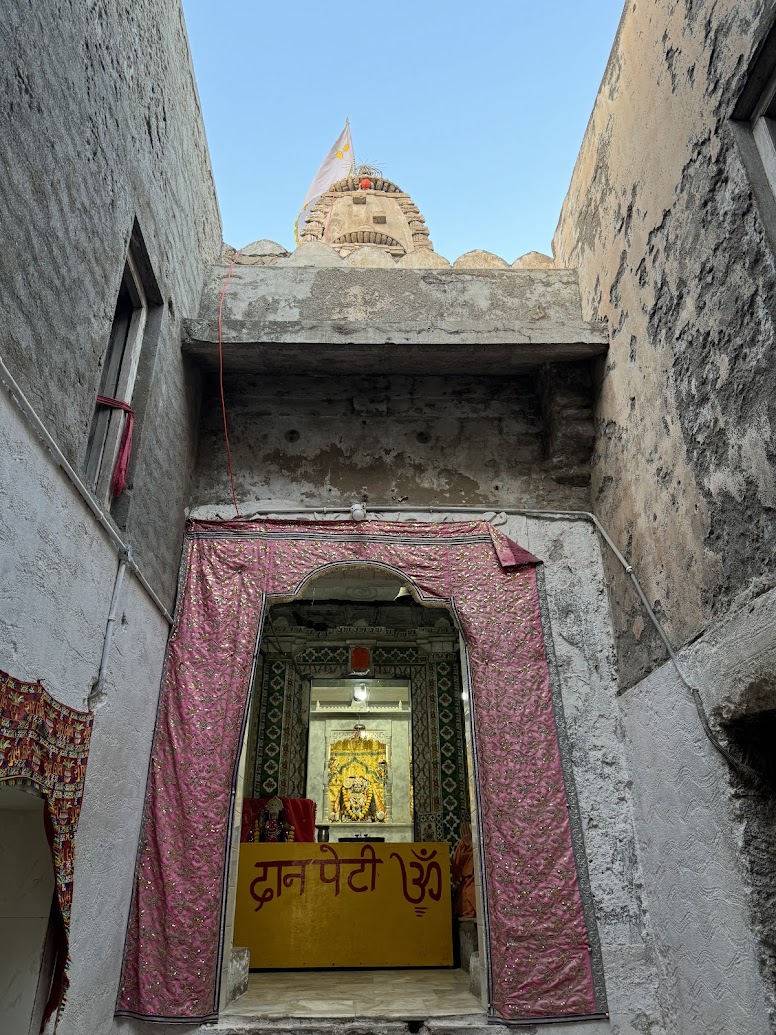
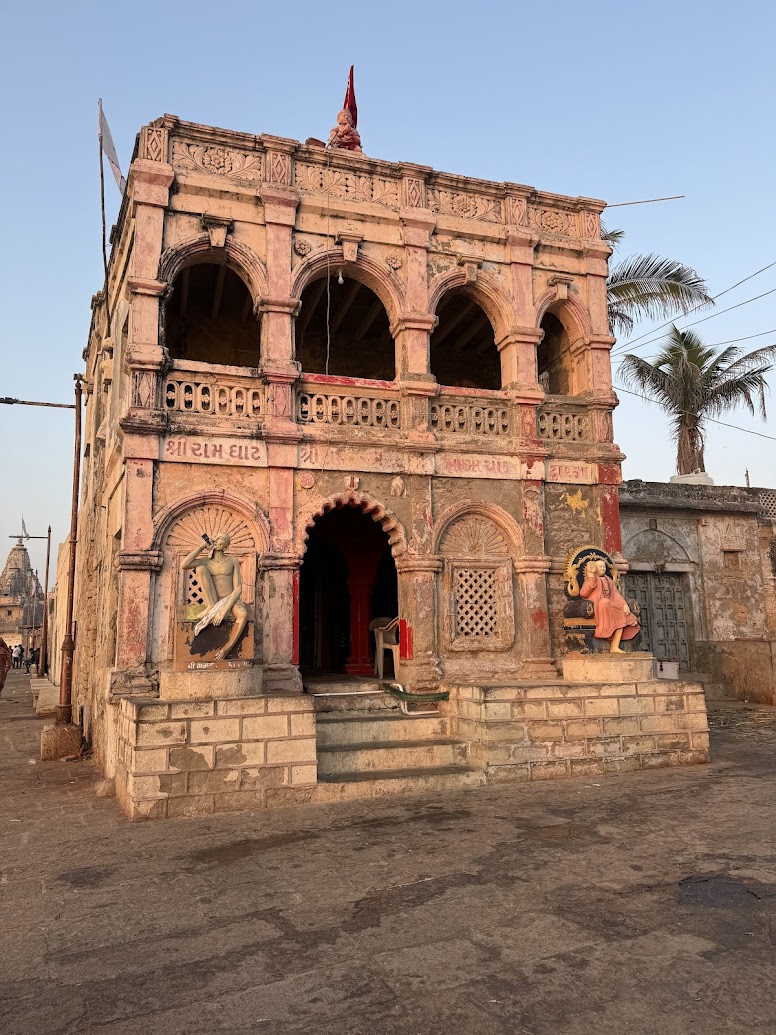
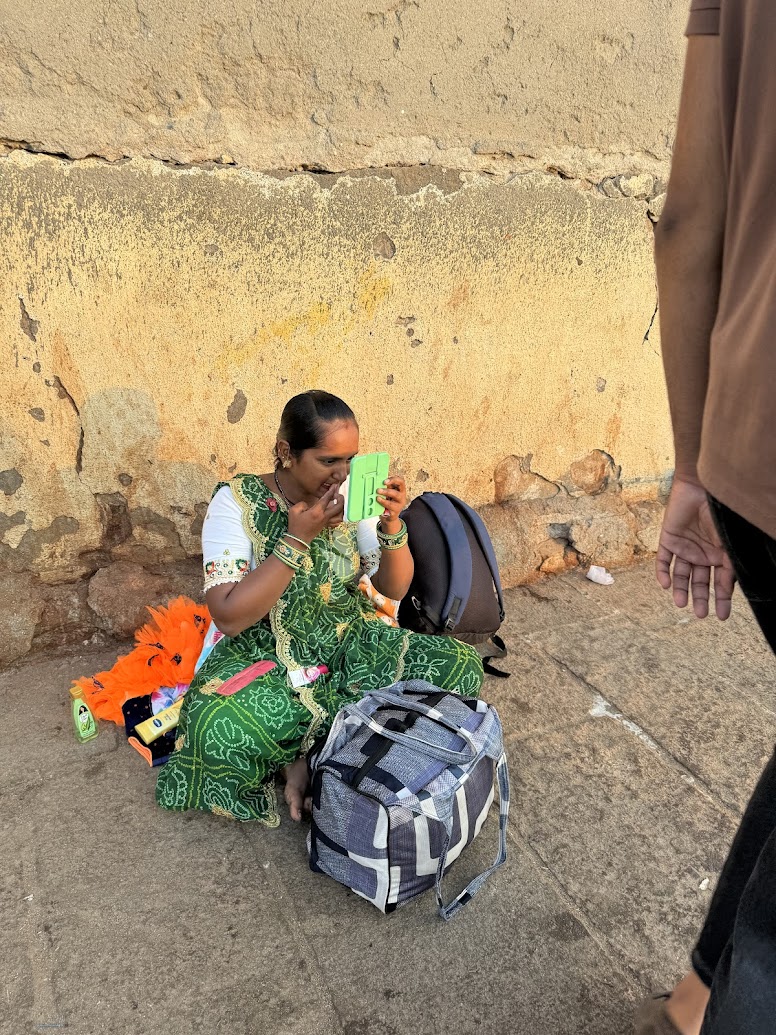
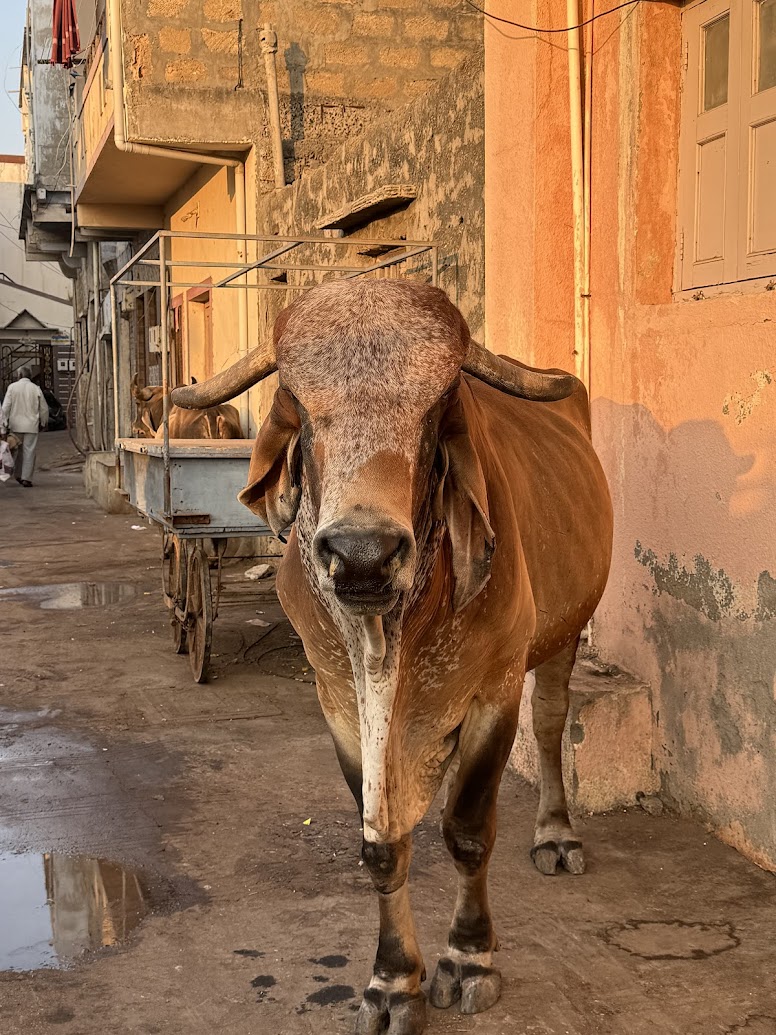
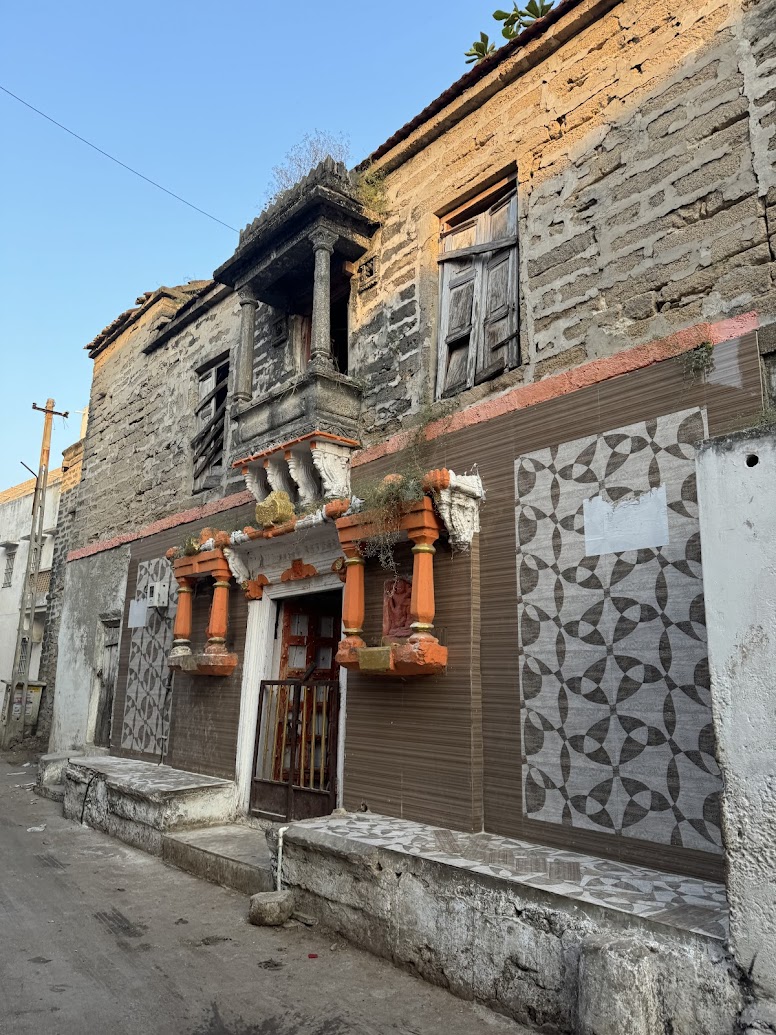
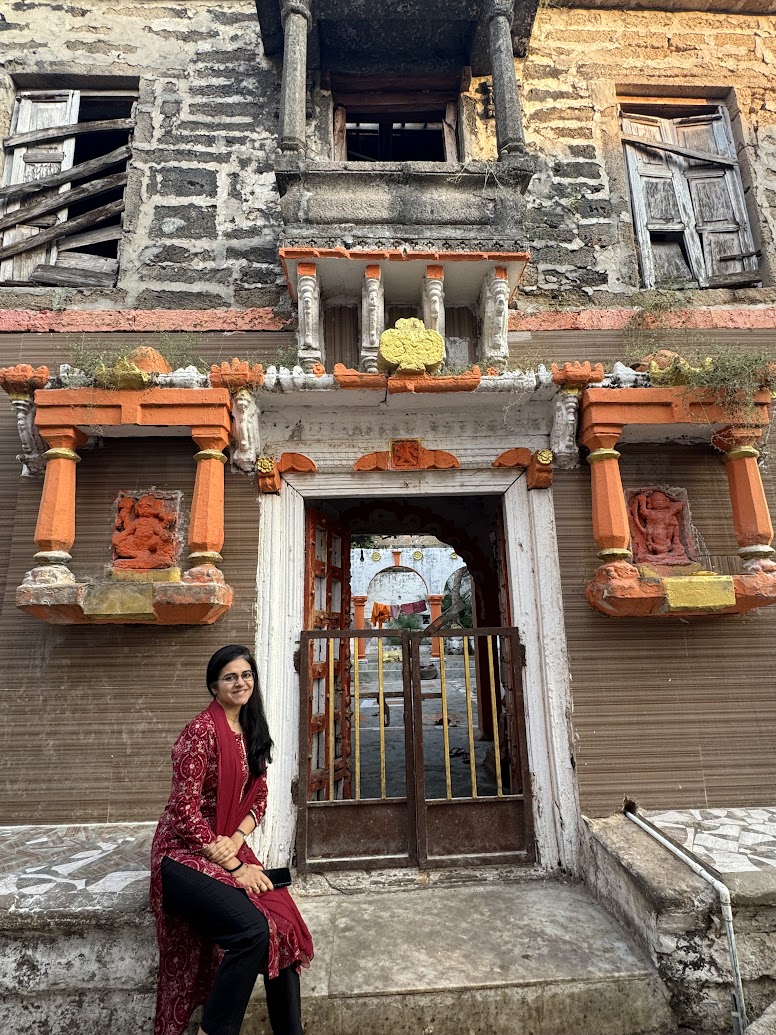
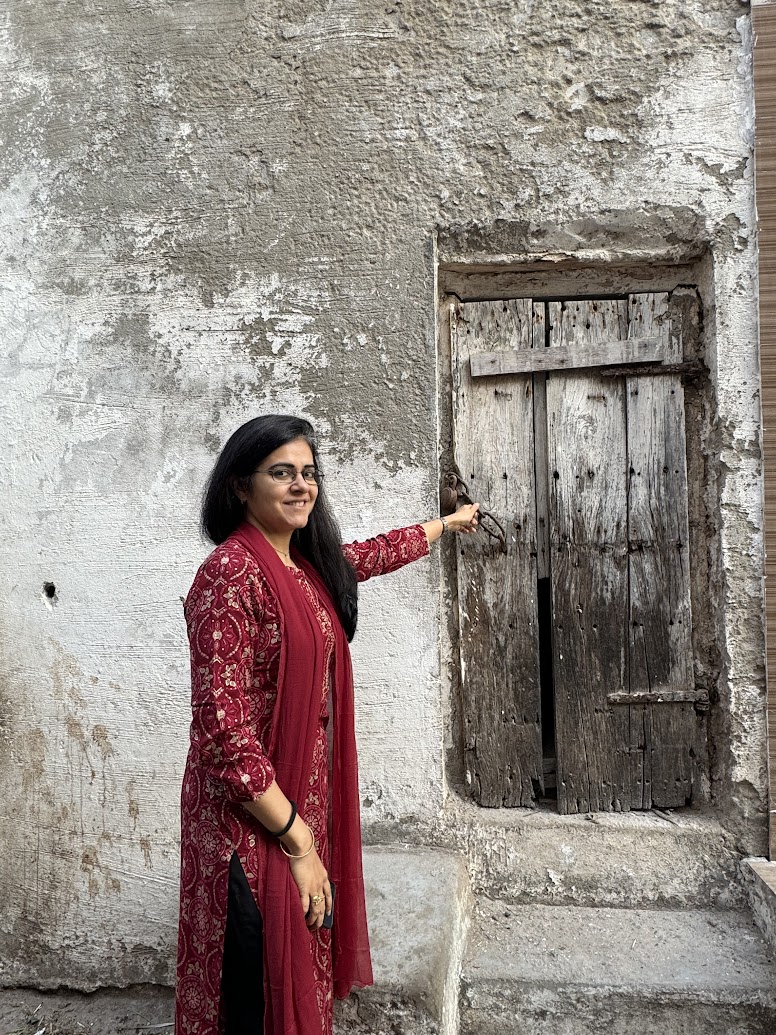
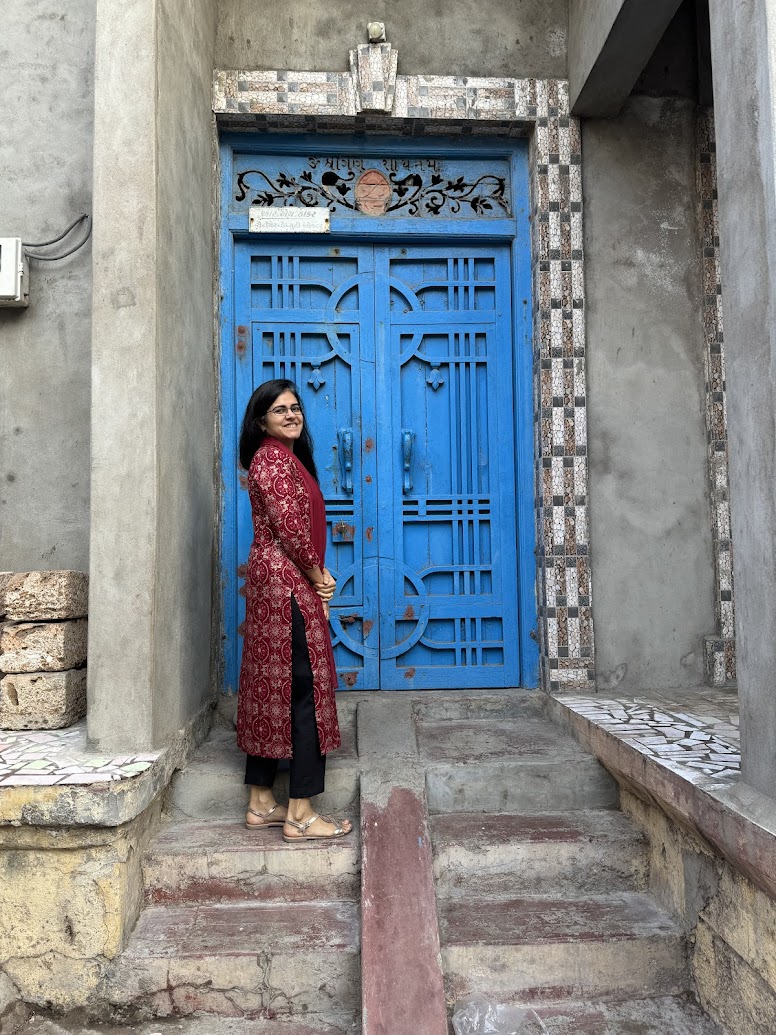
The next morning, I went for an early walk — by the sea, along the Gomti Ghat — watching the sun rise, passing countless temples and idols, wandering through Dwarka’s narrow lanes, admiring the homes with their beautiful doors, spotting camels, catching glimpses of the lighthouse… slow travel at its best.
IV Darshan Trail around Dwarka
My darshan journey continued with visits to:
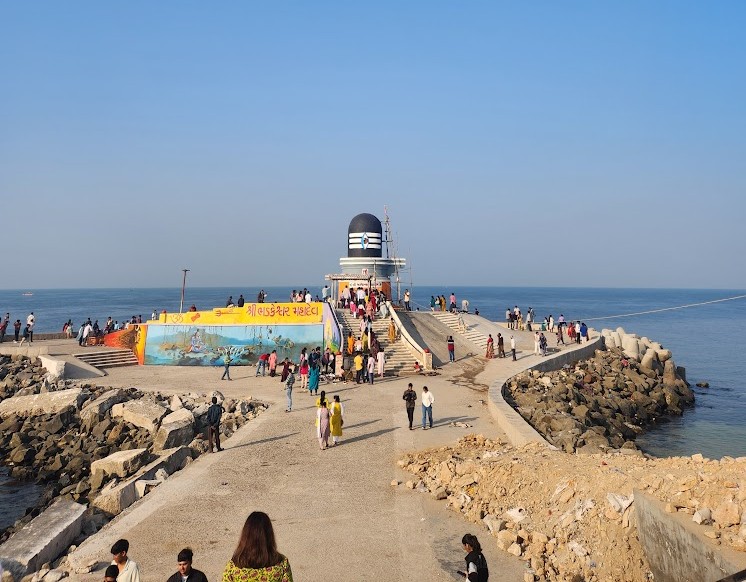
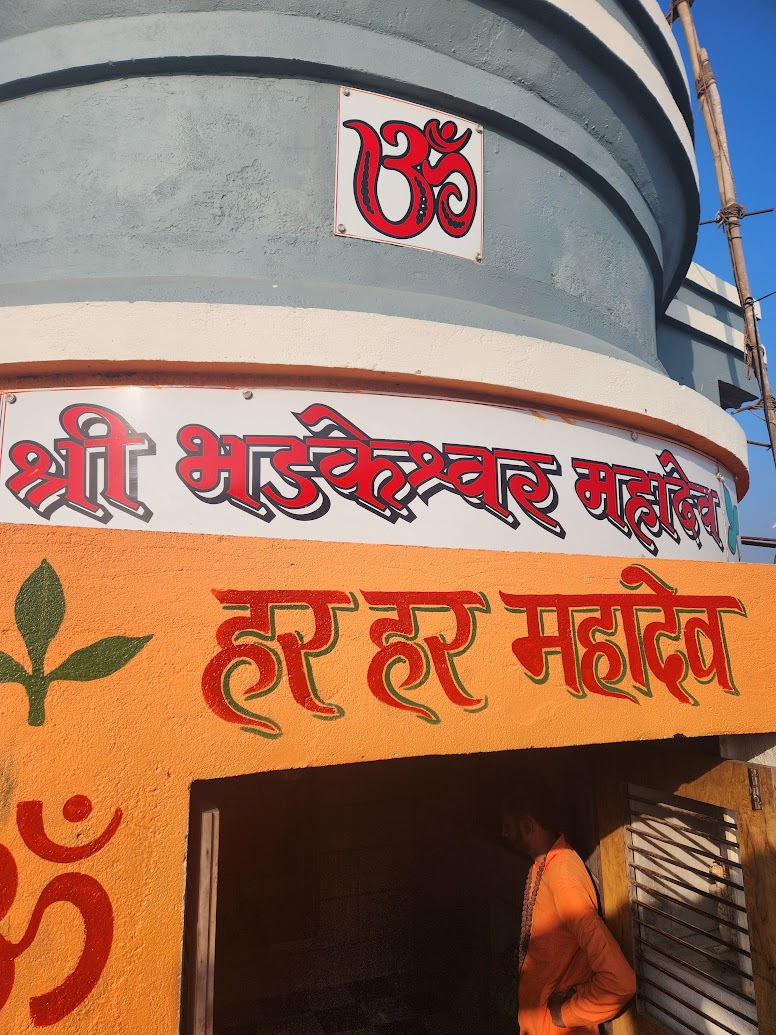
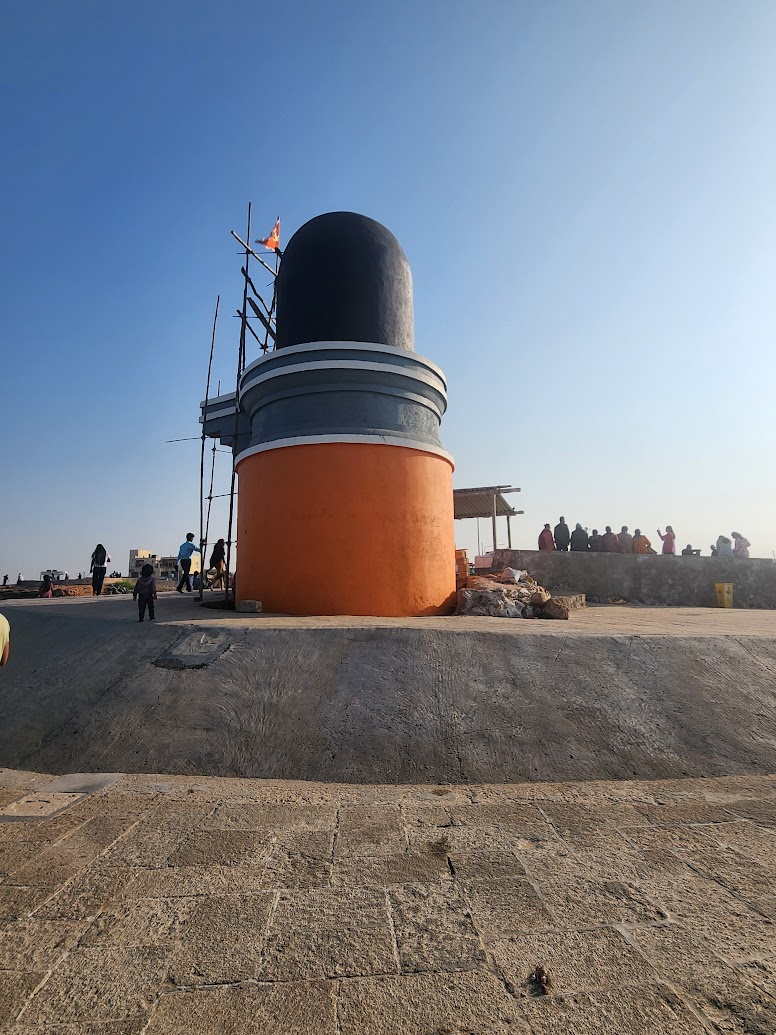
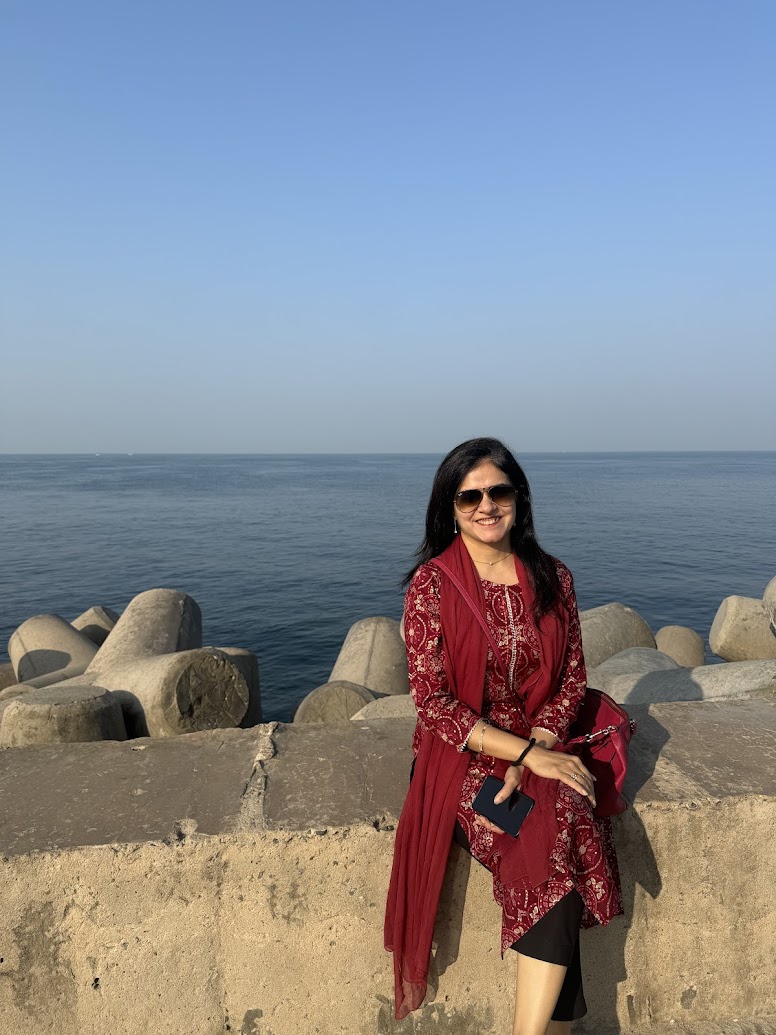
a) Bhadkeshwar Mahadev Mandir: Believed to be over 5,000 years old, this Shiva temple sits on a small hillock surrounded by the Arabian Sea. During high tide, it becomes partially submerged, and in the June–July monsoon, it is completely engulfed — as if the sea itself performs a sacred jalabhishek to Mahadev. Beyond its spiritual significance, the temple offers some of the most breathtaking views of the Dwarka coastline.
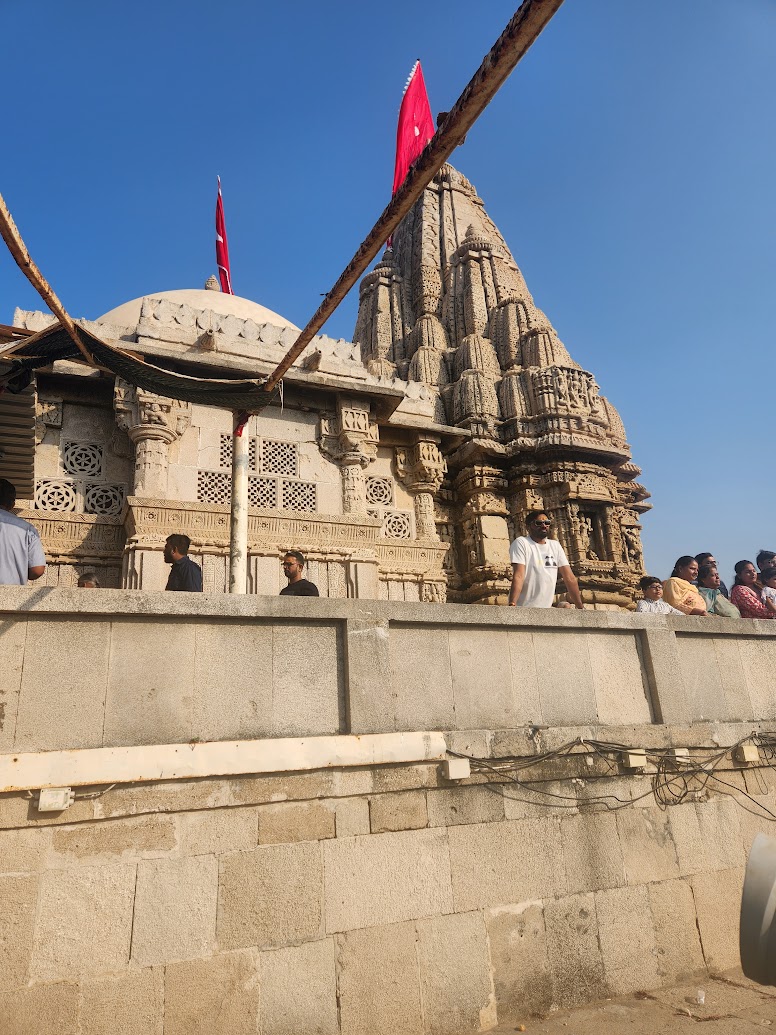
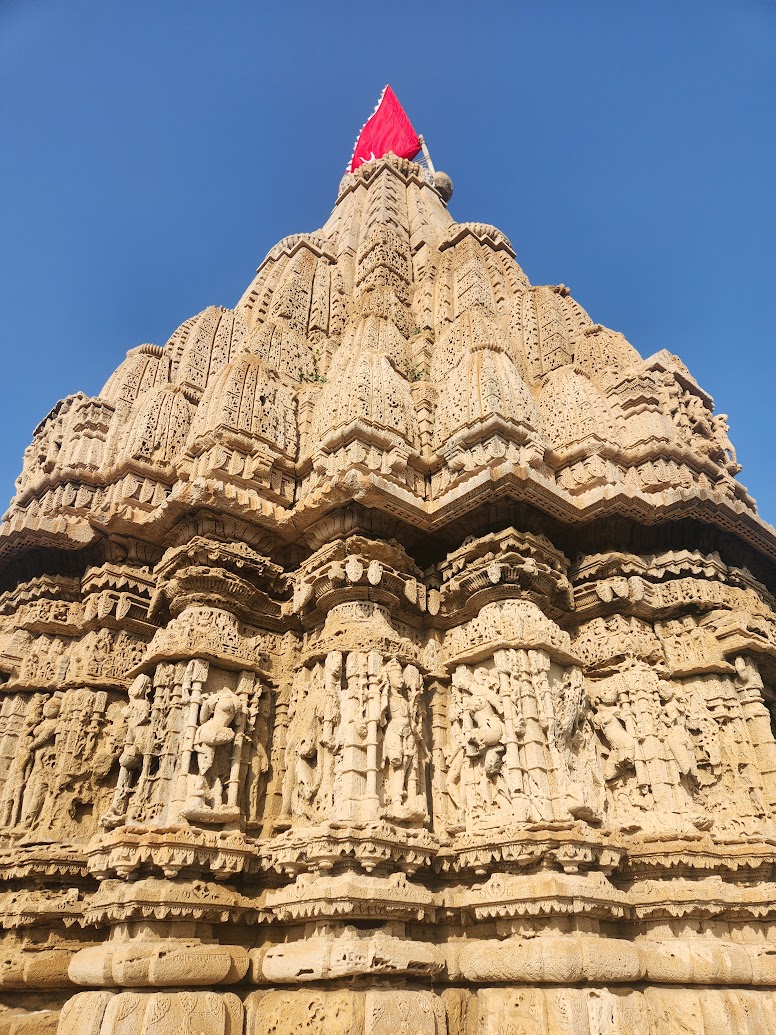
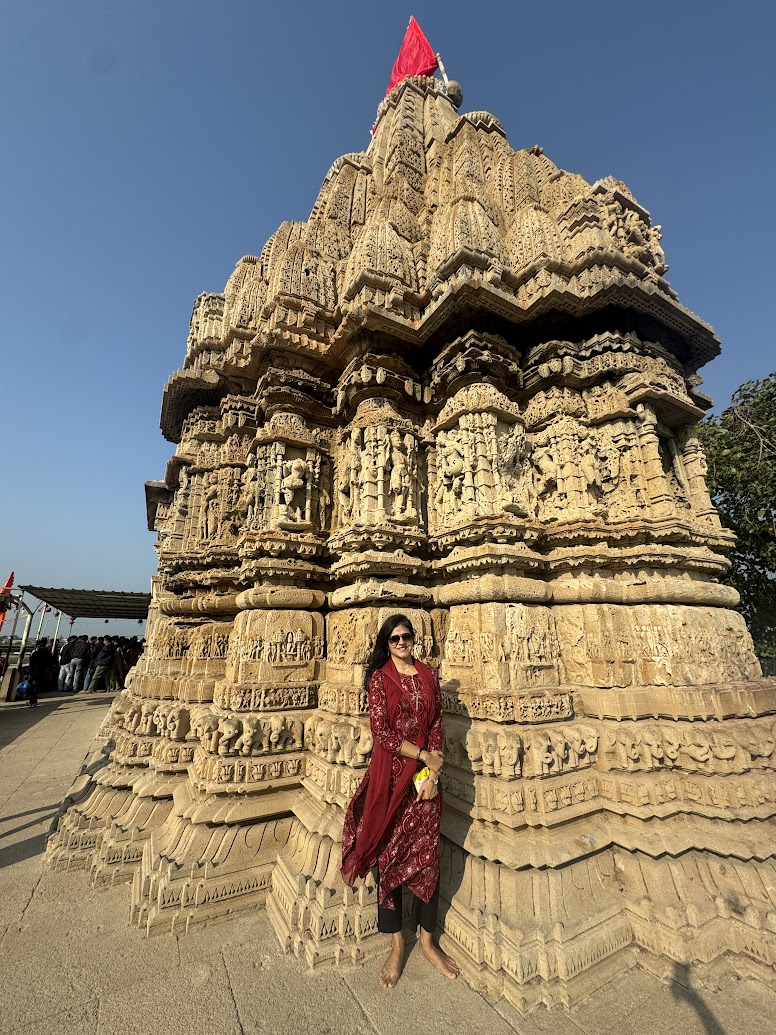
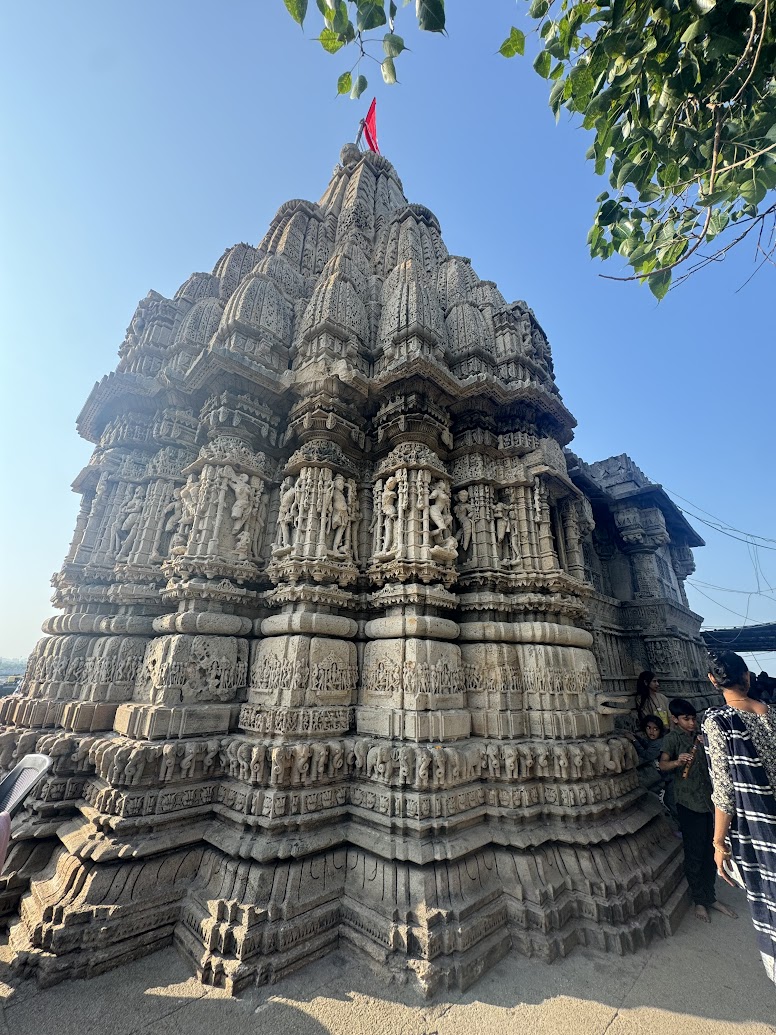
b) Rukmini Devi Mandir: This temple showcases exquisite Nagara-style architecture, adorned with intricate carvings of gods, goddesses, human figures (naratharas), and elephants (gajatharas). Inside, a beautiful marble idol of Rukmini Devi stands with four hands holding the Shankha, Chakra, Gada, and Padma. A unique tradition here is jal daan (donation of water), and water itself is given as prasad — deeply symbolic and humbling.
c) Beyt Dwarka: Believed to be the original residence of Lord Krishna during his reign:
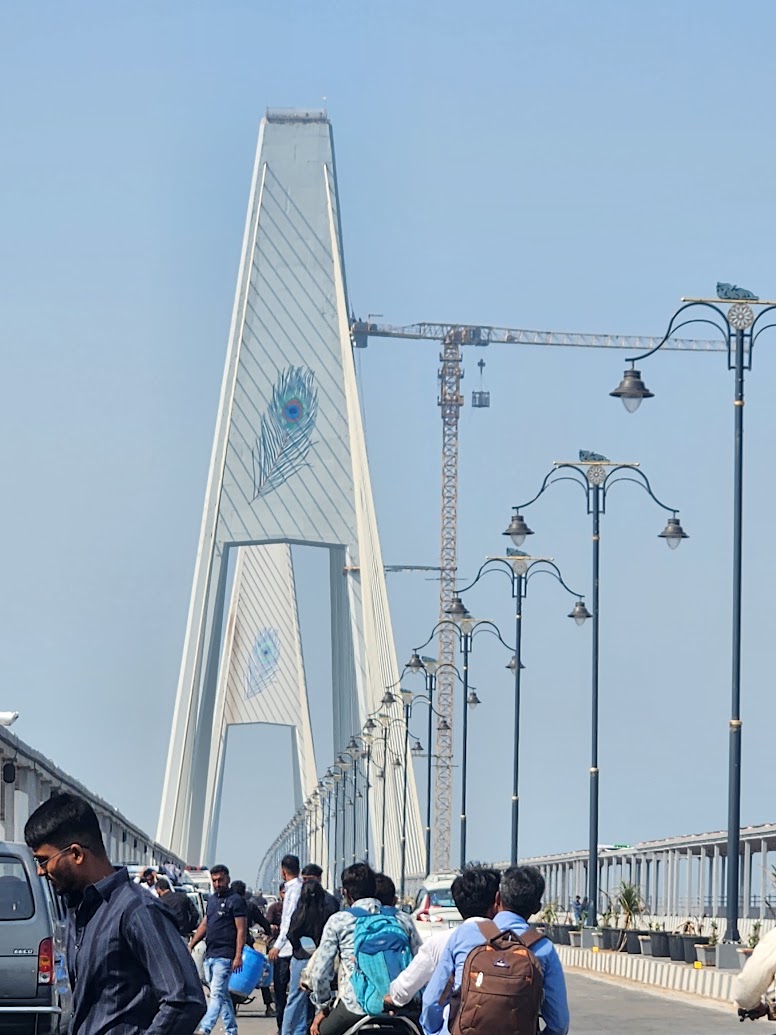
- The journey itself is special, via the Sudarshan Setu, an architectural marvel with Bhagavad Gita verses, images of Lord Krishna, and solar panels lining the walkway
- Sri Keshavraiji Temple, said to stand on the exact site of Krishna’s residence
- Dandi Hanuman Mandir, the only temple where Hanuman and his son Makar are worshipped together; and notably, without weapons
- Sri Chaurasi Dhuna and Ashapura Mata Mandir, a spiritual site established by Rishi Durvasa
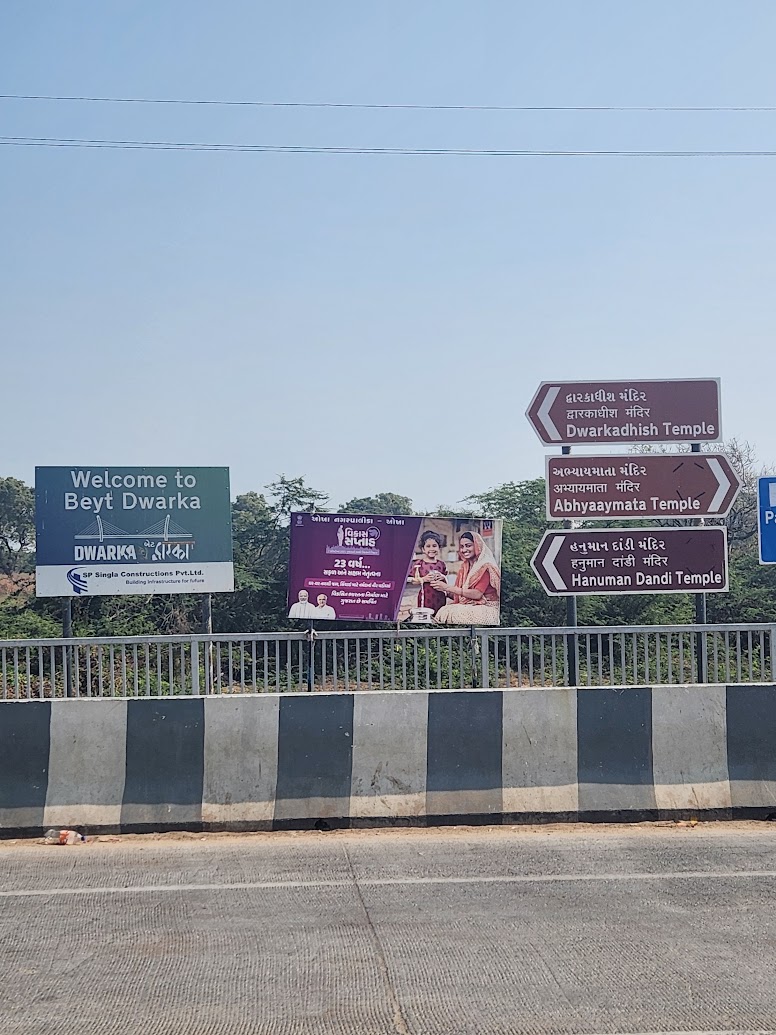
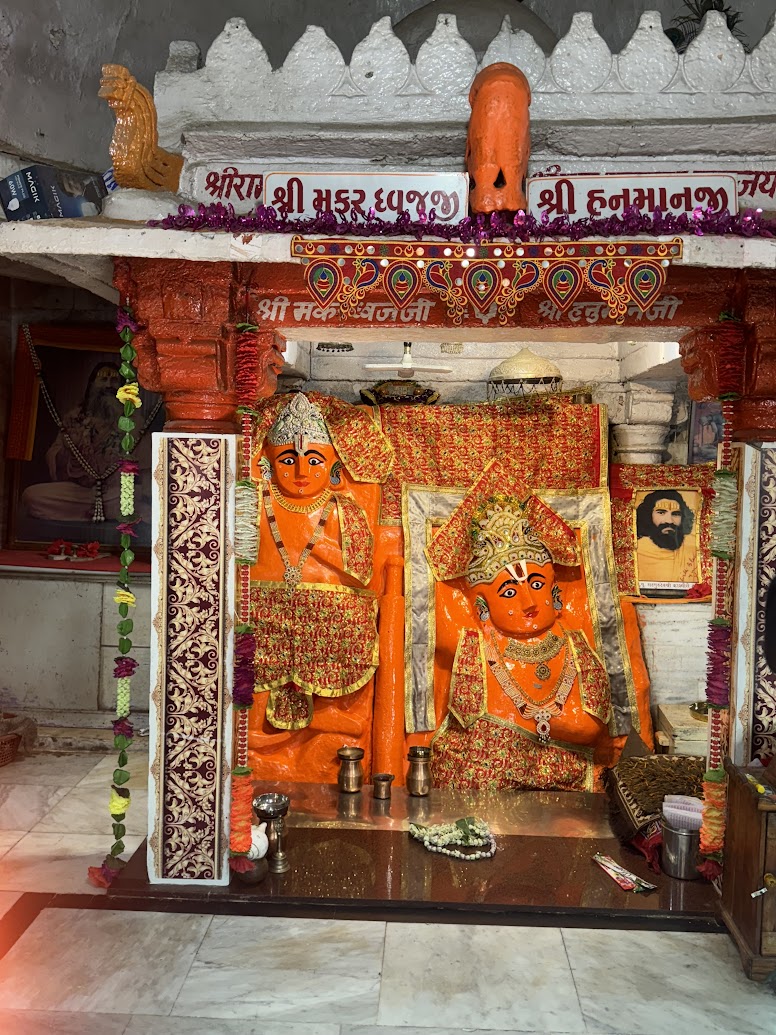
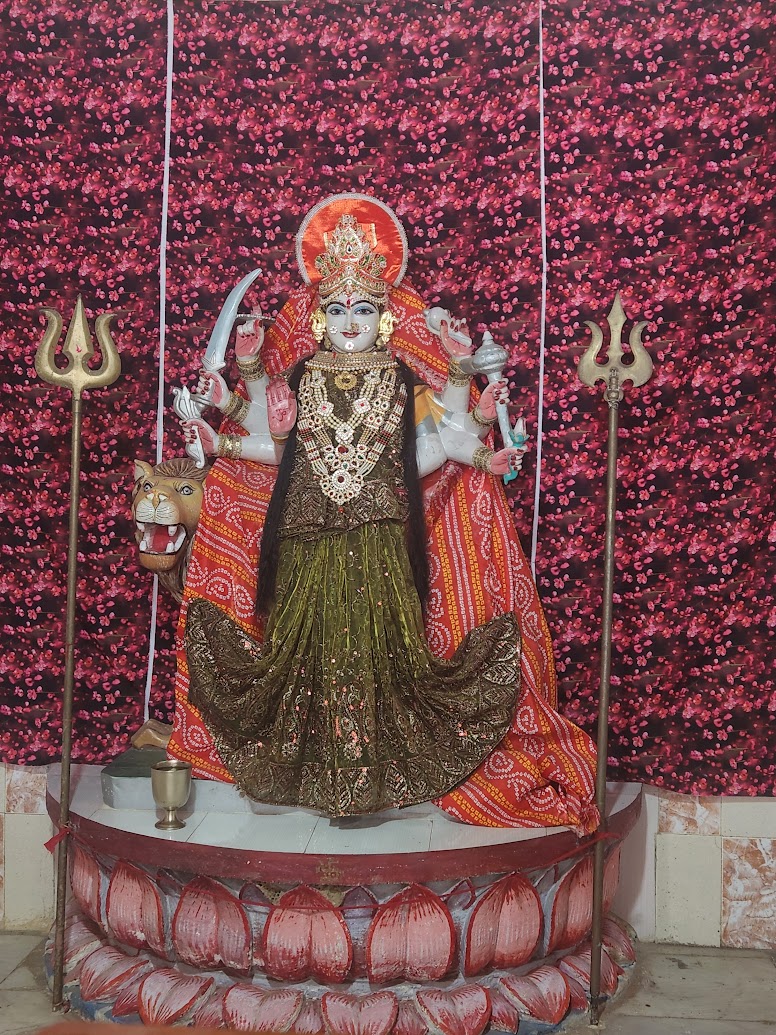
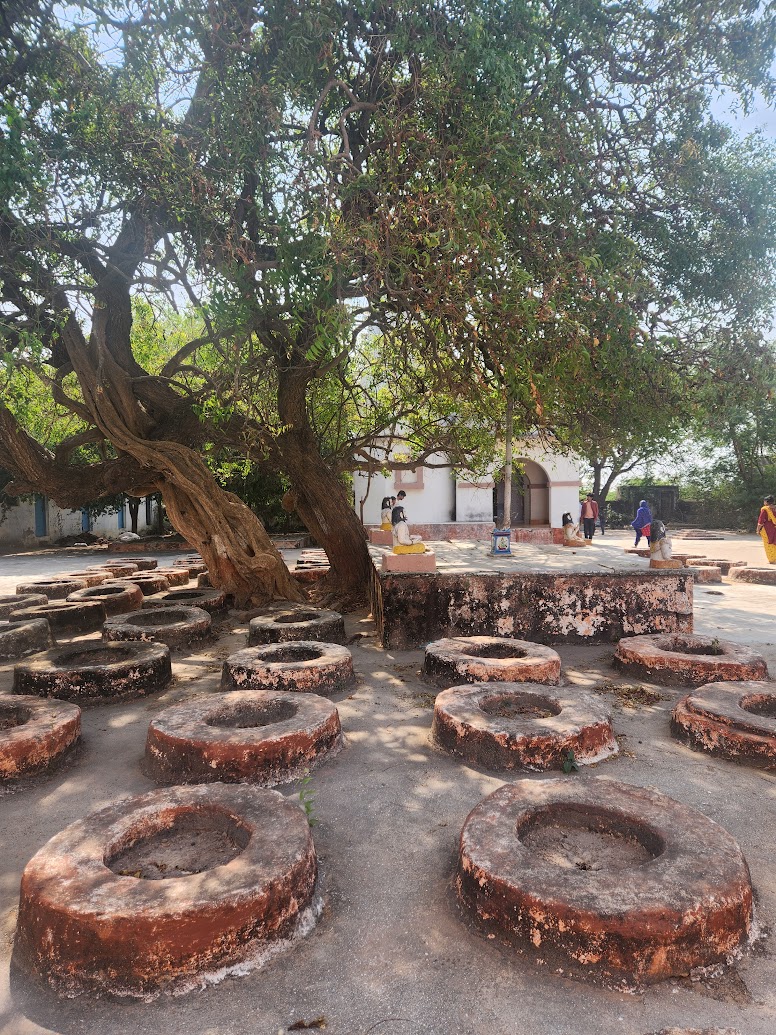
One thing I didn’t quite have the time for (or the inclination, on this trip) was water sports at Beyt Dwarka. That said, if you do have the time and the appetite for adventure, this is definitely something to consider. This belt is known for its beautiful beaches and offers options like parasailing, banana boat rides, snorkelling, kayaking, and even scuba diving.
Interestingly, the Gujarat government has also officially announced plans to introduce India’s first submarine-based tourism experience in the waters around Dwarka and Beyt Dwarka. The idea is to allow visitors to descend nearly 100 metres under the sea to explore marine life and possibly catch a glimpse of artefacts or formations linked to the legendary submerged city of Dwarka. While it hasn’t launched yet, it’s certainly something exciting to look forward to in the future.
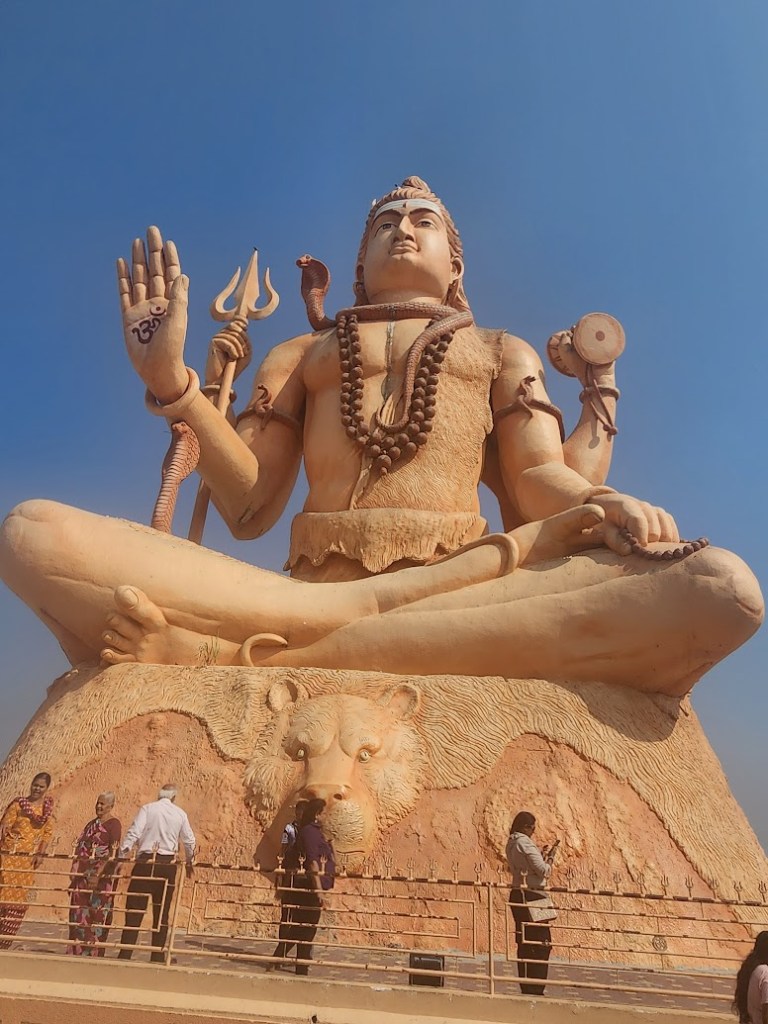
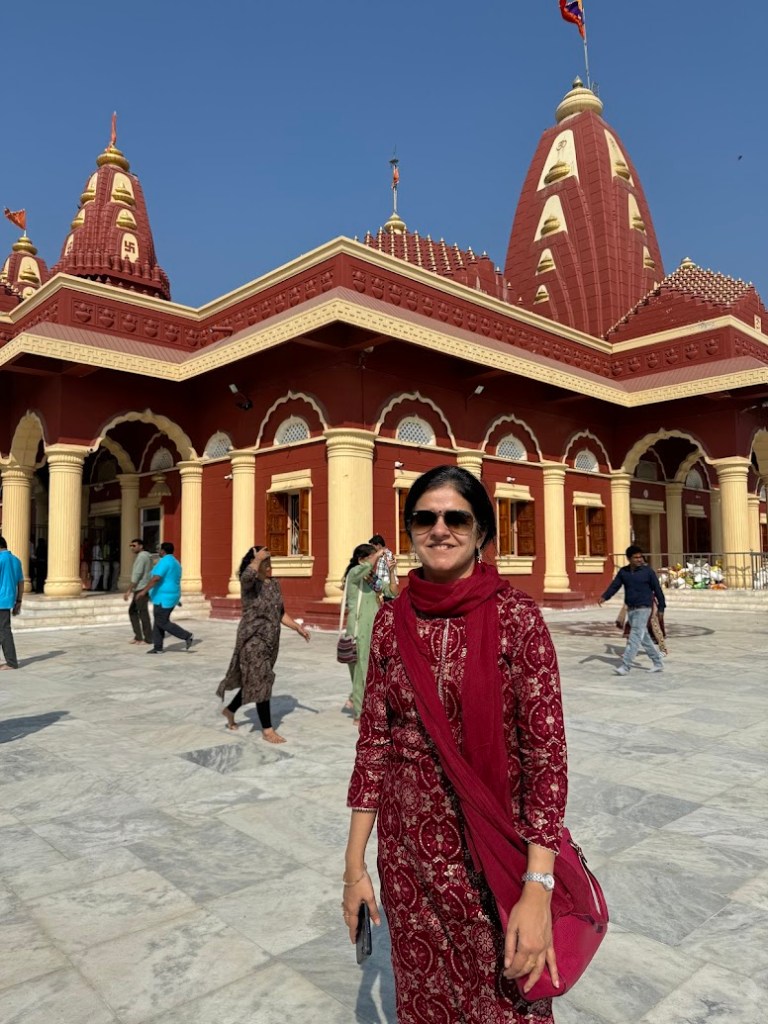
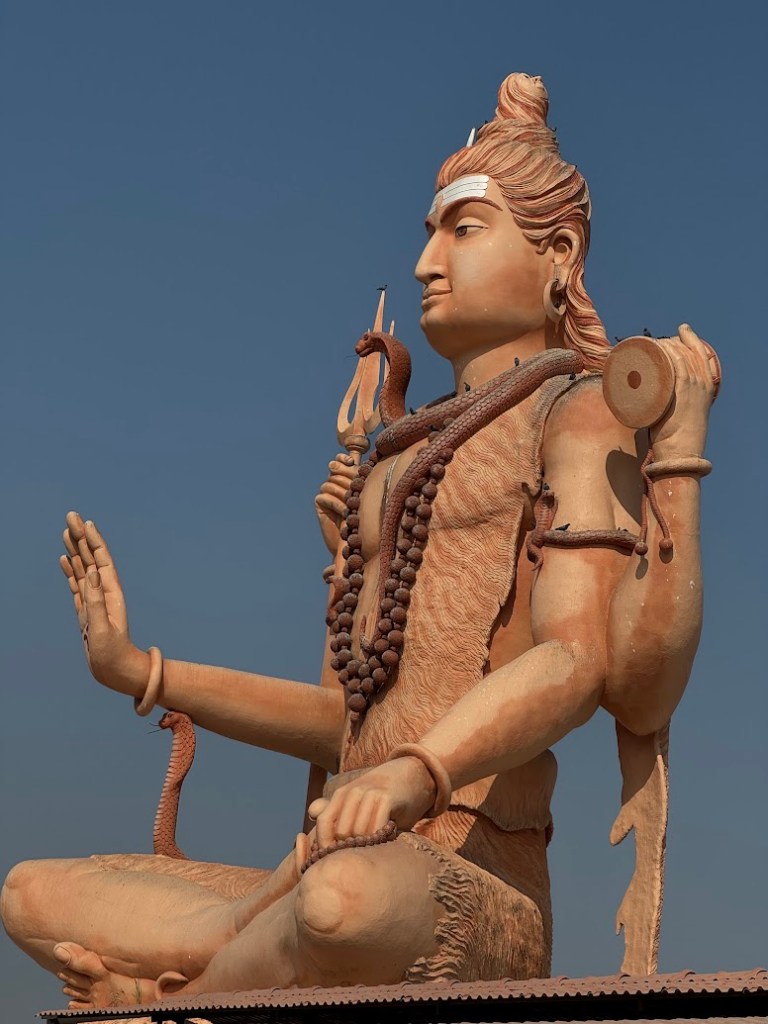
d) Nageshwar Temple: One of the twelve sacred Jyotirlingas, this temple’s most striking feature is the towering 25-meter statue of Lord Shiva in a meditative seated posture. The Jyotirlinga itself is housed in an underground sanctum — a unique and powerful experience.
And with that, it was time to move on to the next leg of this journey…
Stay tuned. 🌿✨
 DestinationDialoguesbyCharu
very informative. Look forward to part 2
LikeLike
Sounds like a lovely trip! Glad you enjoyed it.
LikeLike
Thanks! This really helps to book a flight to jamnagar already.
LikeLike